
Identifying Hail Damage vs Regular Aging on Michigan Park Roofs
When severe thunderstorms roll through Washington DC the impact on your roof can be significant. For Michigan Park homeowners distinguishing between hail damage and normal aging is critical for making informed decisions about repairs and insurance claims. The unique architectural styles and weather patterns in this Northeast DC neighborhood create specific challenges that require expert knowledge. DC Department of Consumer and Regulatory Affairs.
Michigan Park homes built between the 1920s and 1950s feature a mix of colonial revival and craftsman styles. Many of these properties have asphalt shingle roofs that face distinct aging patterns from the humid summers and occasional winter storms that characterize the District’s climate. Understanding what constitutes functional hail damage versus cosmetic aging can save you thousands in unnecessary repairs or missed insurance opportunities. How to Get Your Roof Ready for a DC Winter in Chevy Chase.
Key Differences Between Hail Damage and Normal Roof Aging
Recognizing the physical characteristics of each type of damage is the first step in proper roof assessment. Hail damage creates specific patterns that differ markedly from the gradual deterioration caused by sun exposure and moisture.
Visual Signs of Hail Impact
Hail damage appears as concentrated impact points where ice pellets strike the shingle surface. These marks show as circular depressions with a central point of impact. The force of the hail often dislodges granules from the shingle surface creating a shiny or exposed area that looks different from surrounding material.. Read more about How Long Different Roofing Materials Actually Last in the Humid DC Climate.
Under magnification you can see the fiberglass mat has been fractured or the asphalt has been displaced. These impact zones often appear in clusters following the storm’s path. The damage creates pathways for water infiltration that worsen over time. Metal Roof vs Asphalt Shingles Cost.
Normal Aging Characteristics
Roof aging develops gradually across the entire surface. Shingles lose granules through normal weathering causing a uniform dull appearance. The edges curl and the surface becomes brittle from UV exposure. You will see random cracking patterns that follow the shingle’s natural grain rather than circular impact marks.. Read more about Why Your Park View Rowhouse Might Have a Leak Even if the Shingles Look Fine.
Algae growth creates dark streaks particularly on north-facing slopes where moisture lingers. This black discoloration is cosmetic and does not affect the shingle’s structural integrity. Moss may grow in shaded areas creating a green fuzzy appearance that traps moisture against the surface.
Common Hail Damage Patterns in Michigan Park
The architectural diversity in Michigan Park creates varied vulnerability to hail damage. Understanding these patterns helps homeowners identify problems specific to their roof type.. Read more about Understanding the Difference Between Manufacturer and Labor Warranties in Deanwood.
Asphalt Shingle Roof Vulnerabilities
Standard three-tab shingles show bruising where hail impacts fracture the fiberglass mat beneath the asphalt layer. You will notice a soft spot when pressing on the damaged area. The damage often appears as random circular marks with granule loss at the center.
Architectural shingles may show less obvious damage since their laminated construction provides more impact resistance. However the underlying mat can still fracture causing latent damage that leads to premature failure. Look for displaced granules and fractured sealant strips along the edges.
Flat Roof Systems in Historic Homes
Many Michigan Park homes feature flat or low-slope sections particularly on additions and porches. These surfaces using modified bitumen or built-up roofing show hail damage as punctures or surface bruising. The soft membrane material dents under hail impact creating weak points that expand with temperature changes. Roofing Rockville.
Water pooling becomes a significant issue when hail damage creates low spots. The weight of standing water accelerates deterioration of the damaged membrane. You may notice bubbles or blisters forming weeks after a storm as moisture penetrates the compromised surface.
Diagnostic Tools for Hail Damage Assessment
Professional roofers use specific techniques to identify hail damage that may not be visible from ground level. These diagnostic methods reveal the true extent of storm impact.
The Chalk Test Method
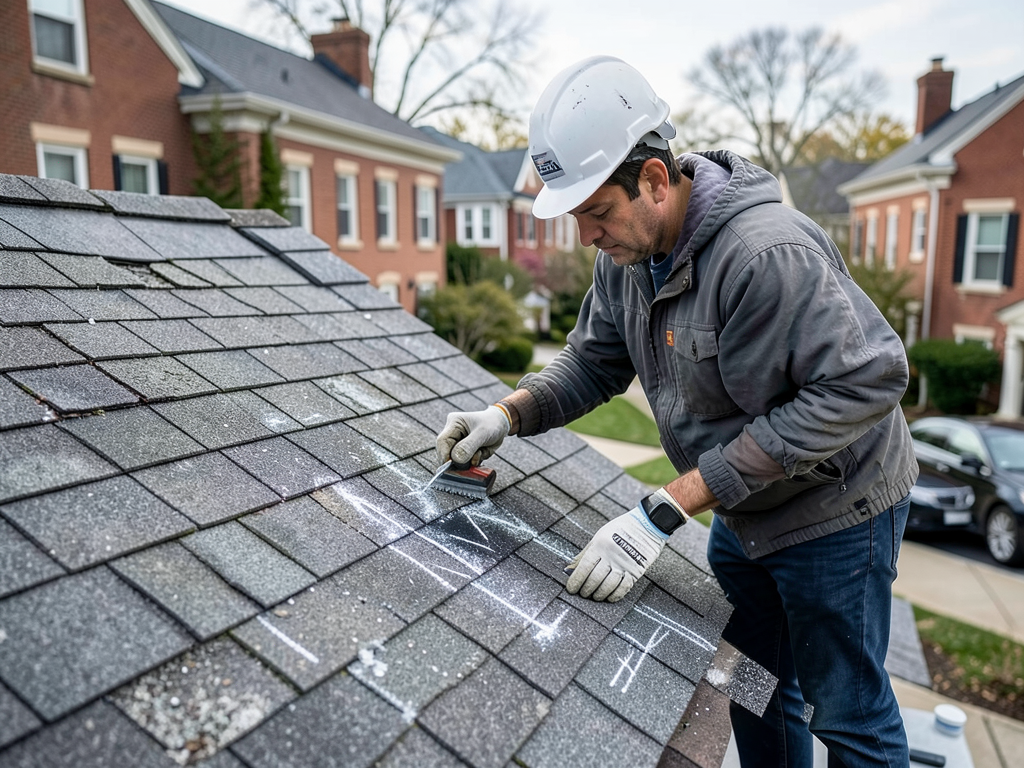
Roofers use sidewalk chalk to identify impact points on asphalt shingles. By rubbing chalk across the surface then wiping it away impact marks become visible as clean circles where hail displaced granules. This technique reveals damage that blends with normal weathering.
The test works because hail creates a depression that removes granules while surrounding areas retain their weathered coating. The contrast becomes clear once the chalk highlights the surface texture differences. This method helps document damage for insurance purposes.
Moisture Meter Scanning
Electronic moisture meters detect water infiltration through hail-damaged areas. The device measures electrical resistance in the roofing material with higher readings indicating moisture presence. Damaged areas often show elevated moisture levels even when the surface appears dry.
Technicians scan in a grid pattern comparing readings across the roof surface. Consistent readings indicate normal aging while elevated spots suggest hail damage has compromised the waterproofing layer. This diagnostic tool helps determine whether damage is cosmetic or functional.
DC Building Code Requirements for Storm Damage Repairs
Washington DC enforces specific building codes that affect how hail damage repairs must be completed. Understanding these requirements helps homeowners navigate the repair process. The Real Cost of a Roof Replacement for Washington DC Homeowners.
Permit Requirements for Roof Replacement
The DC Department of Consumer and Regulatory Affairs requires permits for roof replacements regardless of the damage cause. For hail damage repairs exceeding 30 percent of the roof area you must obtain a building permit before work begins. This ensures compliance with current energy efficiency and fire safety standards.
Historic districts including parts of Michigan Park face additional restrictions. The Historic Preservation Review Board must approve materials and installation methods that maintain architectural integrity. This process can extend project timelines by several weeks. Navigating Historic Preservation Roofing Rules in Dupont Circle.
Insurance Claim Documentation Standards
DC insurance regulations require specific documentation for hail damage claims. Adjusters must provide written reports detailing damage extent location and cause. Photos must show date stamps and scale references to verify hail impact versus normal deterioration.
Insurance companies often require a second inspection if the initial assessment disputes hail damage existence. Having a certified inspector document findings before contacting your insurer strengthens your claim position.
Age-Related Roof Issues Common in Michigan Park
Many Michigan Park homes are approaching or exceeding their roof’s expected lifespan. Understanding normal aging patterns helps distinguish between storm damage and time-related deterioration.
Thermal Cycling Effects
DC’s climate creates significant temperature swings between summer and winter. These fluctuations cause roofing materials to expand and contract repeatedly. Over 20 to 30 years this movement creates stress points that lead to cracking curling and granule loss.
You will notice older shingles becoming brittle and breaking when walked on. The edges lift in winter then flatten in summer creating gaps where wind can lift the material. This pattern differs from hail damage which creates localized impact points rather than widespread deterioration.
Moisture Management Issues
Aging roofs develop compromised flashing around chimneys vents and valleys. The sealant dries out and metal flashing corrodes creating leak points. These issues worsen during heavy rain but are not related to hail impact.
Attic ventilation problems accelerate roof aging by trapping heat and moisture. Poor airflow causes shingles to deteriorate faster on the side facing the sun. This creates uniform wear patterns across large roof sections unlike the random distribution of hail damage.
When to Call a Professional Inspector
Determining whether hail damage exists requires trained observation skills. Certain situations warrant immediate professional assessment.
Post Storm Assessment Timeline
Schedule an inspection within 72 hours after a severe storm. Hail damage may not be immediately visible as some impacts create latent damage that appears days later. Early assessment documents the damage extent before weather or foot traffic obscures impact marks.
DC experiences most severe thunderstorms between May and September. If your neighborhood reported golf ball sized hail or larger nearby properties likely sustained similar damage. Document the storm date and any visible damage with photos before cleaning up debris.
Insurance Claim Deadlines
DC insurance policies typically require storm damage claims within one year of the event. However some insurers shorten this window to 180 days for hail specifically. Missing these deadlines can result in claim denial even with documented damage.
Professional inspectors provide written reports with damage classifications that meet insurance requirements. These documents include repair cost estimates and photos that support your claim. The inspector can also communicate directly with insurance adjusters to ensure accurate damage assessment.
Preventing Future Hail Damage
While you cannot prevent hail storms you can minimize damage through proactive measures. These strategies protect your investment and extend roof lifespan.
Impact Resistant Materials
Class 4 impact resistant shingles provide significantly better protection against hail damage. These products undergo testing with steel balls dropped from specific heights to simulate hail impact. The reinforced mat and modified asphalt construction resists fracturing under impact.
Many insurance companies offer premium discounts for impact resistant roofing. The initial cost premium of 15 to 20 percent often pays for itself through reduced damage risk and insurance savings. Check with your insurer about specific requirements for impact resistance classification.
Regular Maintenance Schedule
Annual roof inspections identify developing problems before they become major issues. Technicians check for loose shingles damaged flashing and ventilation problems that accelerate aging. Addressing these issues promptly prevents water infiltration that worsens hail damage.
Gutter cleaning prevents water backup that can mask hail damage. When gutters overflow water flows under shingles creating moisture problems that mimic hail impact damage. Clean gutters allow proper drainage and make damage assessment more accurate.
Cost Considerations for Hail Damage Repairs
Understanding repair costs helps homeowners budget appropriately whether insurance covers the damage or not. Several factors influence the final price.
Repair Versus Replacement Economics
Minor hail damage affecting less than 10 percent of the roof surface often warrants repair rather than replacement. Technicians replace individual damaged shingles and seal surrounding areas. This approach costs 30 to 50 percent less than full replacement.
Extensive damage affecting multiple slopes or over 30 percent of the surface typically requires replacement. Insurance policies usually cover replacement cost value rather than actual cash value for storm damage. This means you receive funds for new materials rather than depreciated value.
Additional Repair Costs
Hail damage often affects other building components beyond the roof surface. Skylights may crack siding can dent and gutters sustain impact damage. These collateral damages increase repair complexity and cost.
Historic homes in Michigan Park may require custom matched materials to maintain architectural integrity. Finding period appropriate shingles or slate tiles can add 25 to 40 percent to material costs. Some repairs require approval from the Historic Preservation Office adding administrative fees.
Frequently Asked Questions
How can I tell if my roof has hail damage?
Look for circular impact marks with granule loss shiny spots where asphalt is exposed and soft areas that feel spongy when pressed. Hail damage often appears as random circular patterns rather than uniform wear. A professional inspection with chalk testing can reveal damage not visible from ground level.
Will my insurance cover hail damage?
Most homeowner insurance policies cover hail damage as a named peril. Coverage typically includes repair or replacement costs minus your deductible. You must file claims within policy deadlines usually 180 to 365 days after the storm. Document damage with photos and professional inspection reports to support your claim.
How long after a hailstorm can damage appear?
Some hail damage creates latent problems that emerge weeks or months later. Fractured fiberglass mats may not leak immediately but deteriorate with temperature changes and moisture exposure. Schedule inspection within 72 hours of the storm then monitor for developing issues over the following months.
Should I replace my roof if it has hail damage?
Replacement makes sense when damage affects over 30 percent of the roof surface compromises waterproofing or the roof is near end of life. Minor damage affecting small areas often repairs adequately. A professional assessment helps determine whether repair or replacement provides better long term value.
Can I repair hail damage myself?
DIY repairs risk missing underlying damage that causes future leaks. Improper installation can void manufacturer warranties and create additional problems. Professional roofers have proper safety equipment insurance and warranty coverage. They also provide documentation needed for insurance claims.
Protect Your Michigan Park Home Today
Don’t let hail damage compromise your home’s protection. The unique weather patterns and architectural styles in Michigan Park require specialized knowledge to assess damage accurately. Whether you need a professional inspection insurance claim assistance or complete roof replacement our team understands the specific challenges facing Washington DC homeowners.
Call (771) 240-3300 today to schedule your comprehensive roof assessment. We provide detailed written reports with photos that support insurance claims and help you make informed decisions about repairs. Our technicians understand DC building codes historic preservation requirements and insurance documentation standards.
Pick up the phone and call (771) 240-3300 before the next storm hits. Early assessment prevents minor damage from becoming major problems. Don’t wait until water leaks through your ceiling to discover hail damage existed for months. Your Michigan Park home deserves expert care from professionals who understand local conditions. For more information, visit National Fire Protection Association building codes.