menu

Emergency Tree Impact & Structural Repair in Washington, D.C. – 24/7 Response Teams Deployed Within Hours

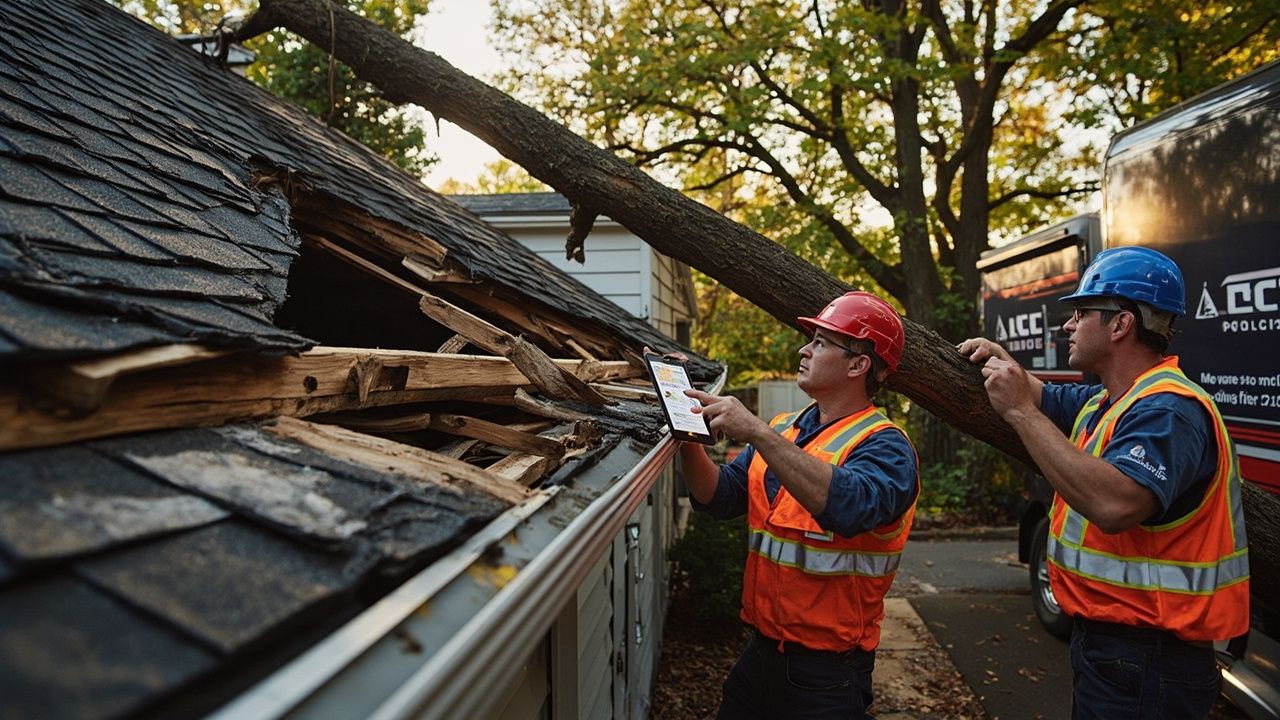
When a tree crushes your roof, you need immediate structural assessment and emergency tarping to prevent interior water damage, mold growth, and further collapse. Our Washington, D.C. crews specialize in fallen tree structural roof repair with rapid response.

Slider Image 1
Slider Image 2
Slider Image 3
Slider Image 4
Slider Image 5
Slider Image 7
Slider Image 8
Slider Image 9
Slider Image 10
Slider Image 11

Why Tree Damage to Washington, D.C. Roofs Demands Immediate Structural Intervention

A fallen tree does not just damage shingles. It crushes roof decking, snaps rafters, and compromises load-bearing trusses. In Washington, D.C., where summer storms bring sudden microbursts and aging oaks line historic neighborhoods like Cleveland Park and Georgetown, tree impact roofing services are not optional. They are urgent.

The District's dense tree canopy, combined with shallow root systems in compacted urban soil, creates a perfect storm for limb failure. When a mature tree weighs several tons, the impact force can punch through your roof deck, snap collar ties, and expose your attic to rain in seconds. Within 24 hours, water infiltration begins rotting the framing. Within 48 hours, mold spores colonize damp insulation. Within 72 hours, structural integrity degrades enough to risk secondary collapse.

Emergency tree damage roof repair starts the moment you call. You need a crew that can safely remove the tree, tarp the opening, assess hidden structural damage, and document everything for your insurance adjuster. You need someone who understands that a crushed ridge beam is different from a punctured roof plane. You need a team that can tell the difference between repairable sheathing and framing that must be rebuilt from the rafters up.

Washington, D.C. homeowners in Chevy Chase, Palisades, and Woodley Park know that tree-lined streets are beautiful until a storm hits. When branches fall, the clock starts. Every hour of exposure increases the total repair cost. Emergency roof restoration tree damage is not about aesthetics. It is about stopping the cascading failure before your attic becomes uninhabitable.

Why Tree Damage to Washington, D.C. Roofs Demands Immediate Structural Intervention
How We Execute Fallen Tree Structural Roof Repair in Washington, D.C.

How We Execute Fallen Tree Structural Roof Repair in Washington, D.C.

Emergency tree impact repair is a staged operation. We do not just remove the tree and slap on a tarp. We follow a protocol designed to stabilize the structure, document the damage, and prevent secondary failures.

First, we coordinate with a licensed arborist or tree removal service to safely extract the tree without causing additional roof deflection. If the tree is still resting on the roof, removing it improperly can worsen the damage. We assess whether the rafters are bearing the load or if the tree has already punched through. If the roof deck is sagging, we shore up the underside with temporary bracing before extraction.

Once the tree is off, we inspect the roof framing for hidden damage. A tree that lands on the ridge beam can crack collar ties three feet away from the impact zone. We check for split rafters, displaced ridge boards, and crushed top chords on trusses. We probe the sheathing for soft spots where water has already soaked through. We document every failure point with photos and measurements for your insurance claim.

Next, we install a heavy-duty tarp system. This is not a blue poly tarp weighted with bricks. We use reinforced tarps anchored with battens screwed into sound framing, creating a weatherproof seal that can survive another storm while we wait for materials and approvals.

Then we write the scope. Repair roof crushed by tree requires precise documentation. We itemize every damaged component, from asphalt shingles and underlayment to OSB sheathing, rafters, fascia, and soffit. We note whether the damage extends into the interior ceiling or insulation. We provide your adjuster with a line-item estimate that matches the actual structural failure, not a generic roof replacement bid.

We coordinate with your insurance timeline, but we do not wait to start temporary weatherproofing. That happens the same day you call.

What Happens When You Call for Tree Impact Roof Repair

Emergency Tree Impact & Structural Repair in Washington, D.C. – 24/7 Response Teams Deployed Within Hours
01

Immediate Dispatch and Damage Assessment

We answer your call, confirm your address in Washington, D.C., and dispatch a crew within hours. On-site, we assess the structural stability of the roof framing, identify compromised rafters or trusses, and determine whether the tree can be removed safely without causing further collapse. We document the damage with photos and measurements, then brief you on the immediate steps needed to secure your home.
02

Emergency Tarping and Weatherproofing

Once the tree is extracted, we install reinforced tarping systems anchored directly into sound roof framing. This is not a temporary fix. It is engineered to withstand wind and rain until permanent repairs begin. We seal all penetration points, prevent water infiltration into the attic, and protect your interior from further damage. This step happens the same day, regardless of insurance approval timelines.
03

Structural Repair and Roof Restoration

After insurance approval, we rebuild the damaged roof section. We sister cracked rafters, replace crushed sheathing, and install new underlayment and shingles that match your existing roof. We restore flashing, fascia, and soffit to original condition. The repair is invisible from the street. Your roof returns to full structural integrity, and we provide documentation of all work completed for your records and future home sale.

Why Washington, D.C. Homeowners Trust Local Expertise for Tree Impact Repairs

Tree damage to a roof is not a DIY situation. It is a structural engineering problem that requires knowledge of load paths, framing systems, and building codes specific to Washington, D.C.

The District enforces the 2020 International Residential Code with local amendments. When you rebuild roof framing after a tree impact, the repair must match or exceed the original load-bearing capacity. That means understanding tributary areas, rafter span tables, and how to properly sister a damaged member without over-notching or weakening adjacent framing. A general handyman does not know this. A roofing contractor who specializes in emergency tree damage roof repair does.

Washington, D.C. also has historic district restrictions in neighborhoods like Capitol Hill, Dupont Circle, and Old Georgetown. If your home is in a historic overlay zone, your roof repair may require Historic Preservation Review Board approval before you can replace even a single shingle. We know which projects trigger review and how to document that your repair matches the original materials and profile.

We also understand the insurance process. Adjusters in the District see tree damage claims regularly, but they often underestimate hidden structural damage. They see a hole in the roof and price it as a shingle replacement. They do not account for the cracked ridge beam or the waterlogged insulation. We provide detailed documentation that justifies the full scope of repair, so you do not get stuck with an underfunded claim.

Our crews work in Washington, D.C. year-round. We know which suppliers stock dimensional lumber that matches older home framing. We know which inspectors prioritize structural safety over cosmetic details. We know how to navigate permit requirements without delaying your repair. When you hire a local team for fallen tree structural roof repair, you get someone who understands the specific challenges of repairing historic rooflines in an urban environment with strict codes and limited staging areas.

What to Expect During Your Tree Impact Roof Repair

Rapid Response Timeline

We dispatch emergency crews within two to four hours of your call, 24 hours a day. Our goal is to have your roof tarped and weatherproofed before nightfall or before the next rain event. Permanent structural repairs typically begin within five to seven days, depending on material availability and insurance approval. If your roof framing is severely compromised, we can expedite permitting through the D.C. Department of Buildings to prevent delays. You will know the timeline before we leave the initial site visit.

Comprehensive Structural Assessment

Our assessment goes beyond the visible damage. We inspect the attic framing for hairline cracks in rafters, check for ridge beam displacement, and probe sheathing for hidden rot. We measure deflection in the roof plane to determine if the structure has been permanently deformed. We test for compromised insulation and check for electrical damage if the tree impacted near service lines. You receive a written report that documents every structural issue, which becomes the foundation of your insurance claim and repair scope.

Structural Integrity Restoration

Your repaired roof will meet or exceed the original structural capacity. We use engineered lumber where required, sister rafters with proper fastening schedules, and install sheathing with correct spacing and nailing patterns. The finished repair blends seamlessly with the existing roof. Shingles are color-matched, and flashing is installed to manufacturer specifications. You will not see a patchwork job. The repair is engineered to last as long as the original roof, with no weak points or future failure zones.

Insurance Coordination and Documentation

We work directly with your insurance adjuster to ensure your claim covers the full scope of structural damage. We provide itemized estimates, photo documentation, and technical explanations of why certain repairs are necessary. If your adjuster underestimates the damage, we advocate for you with supplemental reports. We do not inflate claims, but we do ensure that hidden structural damage is not overlooked. After the repair, you receive all permits, inspection certificates, and warranty documentation for your records.

Frequently Asked Questions

You Have Questions,
We Have Answers

Will insurance pay for tree removal after a storm? +

Most homeowners insurance policies in Washington, D.C. will cover tree removal if the tree fell due to a covered peril like wind, lightning, or ice storm and caused damage to your home or blocking access. If a tree falls in your yard without hitting a structure, you typically pay out of pocket. Document everything immediately with photos, secure the area, and call your insurer within 24 hours. Policies often cap tree removal between $500 and $1,000 per tree. Act fast to prevent secondary damage from water intrusion or roof collapse.

Can structural damage be repaired? +

Yes, structural damage from fallen trees can be repaired, but speed matters. In Washington, D.C., where humidity accelerates rot and mold growth, delaying repairs worsens the problem. Damaged roof decking, fractured rafters, compromised load-bearing walls, and cracked foundations are all fixable with the right contractor. Emergency tarping stops water infiltration immediately. A licensed structural engineer may be required for severe damage to ensure code compliance. The key is getting a qualified roofer and contractor on-site within hours, not days, to assess the full scope and prevent further deterioration.

Who is responsible for damage caused by a fallen tree? +

In Washington, D.C., the property owner where the tree lands is usually responsible for damage and cleanup, regardless of where the tree originated. If your neighbor's healthy tree falls during a storm, you file a claim with your own insurance. You can only pursue your neighbor's liability coverage if you prove negligence, such as ignoring a visibly diseased or dead tree. Document the tree's condition before removal if you suspect negligence. Act immediately to mitigate damage. Your insurer may subrogate against the neighbor later if negligence is proven.

Will lumber companies cut down trees for free? +

No, legitimate lumber companies do not cut down residential trees for free in Washington, D.C. The timber value in urban settings is too low due to embedded nails, poor trunk quality, and transportation costs. Beware of unlicensed operators offering free removal in exchange for wood. They often lack insurance, damage your property, or abandon the job mid-way. After a storm, you need a licensed, insured tree service and roofing contractor who can handle emergency removal, structural assessment, and debris haul-off safely and legally. Free offers are red flags.

How much does homeowners insurance cover for tree removal? +

Most homeowners insurance policies in Washington, D.C. cover $500 to $1,000 per tree for removal, up to a total cap of $5,000 to $10,000 per claim, but only if the tree damages a covered structure or blocks driveway access. If a tree falls in your yard without hitting anything, you pay for removal yourself. Review your declarations page for exact limits. High-value homes may carry endorsements with higher caps. After a storm, prioritize trees that damaged your roof or home first to maximize coverage and prevent further structural harm.

How to get homeowners insurance to pay for tree removal? +

To get homeowners insurance to pay for tree removal in Washington, D.C., document everything immediately. Take photos of the fallen tree, the damage it caused to your roof or structure, and any blocked access points. Call your insurer within 24 hours and file a formal claim. Get a licensed contractor to provide a written estimate that itemizes tree removal and structural repairs separately. Only removal tied to covered damage qualifies. Mitigate further damage by tarping exposed areas. Provide all documentation promptly to avoid claim delays or denials.

How much does it cost to fix a structural issue? +

Structural repair costs in Washington, D.C. vary widely based on damage severity. Emergency tarping runs a few hundred dollars. Replacing damaged roof decking, rafters, or trusses can range from moderate to significant expenses depending on square footage and accessibility. Foundation cracks, load-bearing wall damage, or compromised framing require engineering assessments and permits, increasing costs. Historic District properties face additional permitting hurdles. Never delay repairs to save money. Water infiltration and mold escalate costs exponentially. Get multiple licensed contractor estimates and prioritize stopping water entry first.

Do homeowners pay for structural damage? +

Yes, homeowners pay for structural damage repairs, but homeowners insurance typically covers damage from sudden, covered events like fallen trees, windstorms, or lightning strikes in Washington, D.C. You pay your deductible, and the insurer covers the rest up to policy limits. If damage resulted from neglect, like ignoring a rotting roof deck, the insurer may deny the claim. After a tree impact, document everything, file a claim immediately, and hire a licensed contractor to assess and repair structural issues. Delaying repairs voids coverage for secondary damage like mold or rot.

What qualifies as structural damage? +

Structural damage affects components that support your home's stability and safety. In Washington, D.C., this includes fractured or compromised roof rafters, trusses, ridge beams, load-bearing walls, floor joists, and foundation cracks. Cosmetic damage like dented siding or broken shingles is not structural. After a tree impact, look for sagging rooflines, interior ceiling cracks, doors that won't close, or visible splits in framing lumber. A licensed contractor or structural engineer must assess the damage to determine if repairs require permits and engineering drawings to meet code.

Who pays for damage if neighbor's tree falls on the house? +

In Washington, D.C., you typically pay for damage if your neighbor's tree falls on your house, filing a claim with your own homeowners insurance. You can only recover costs from your neighbor if you prove negligence, such as ignoring a visibly dead or diseased tree. Document the tree's condition before removal with photos. Your insurer may subrogate against the neighbor's liability policy if negligence is established. Act immediately to mitigate damage by tarping your roof and securing the area. Delaying repairs forfeits coverage for secondary damage like water intrusion or mold.

Why Washington, D.C.'s Urban Tree Canopy Creates Unique Roof Damage Risks

Washington, D.C. has one of the densest urban tree canopies on the East Coast, with mature oaks, maples, and elms lining residential streets in every ward. These trees grow in compacted soil with limited root expansion, making them vulnerable to windthrow during summer thunderstorms and winter ice events. When a tree falls in neighborhoods like Forest Hills, Shepherd Park, or Spring Valley, it often impacts multiple roof planes because homes are close together and trees overhang property lines. Emergency tree damage roof repair in the District is complicated by narrow streets, limited crane access, and the need to protect neighboring structures during tree removal.

Roofing contractors in Washington, D.C. must understand not just framing and shingles, but also historic preservation rules, alley access logistics, and how to coordinate with PEPCO if power lines are involved. Ace Roofing Washington DC works regularly with D.C. permit offices and historic review boards, so we know how to navigate approvals without delaying your emergency repair. We also maintain relationships with local arborists and structural engineers who can provide third-party assessments when insurance disputes arise. Choosing a contractor who knows the District means faster permits, fewer delays, and repairs that meet local code on the first inspection.
Roofing Services in The Washington DC Area

We are proud to serve the entire Washington DC metropolitan area, including all surrounding neighborhoods and communities. Our central location allows us to dispatch our expert teams quickly for emergency repairs or scheduled consultations. Whether you're in Dupont Circle, Georgetown, Capitol Hill, or beyond, we bring premier, trustworthy roofing services directly to your doorstep. View our service area map below to confirm we cover your specific location and then call us to get started on your project.

Address:
Ace Roofing Washington DC, 20 F St NW, Washington, DC, 20001

Additional Services We Offer

Our news updates

Latest Articles & News from The Blogs

How Poor Roof Drainage Can Ruin Your Landscaping in Cathedral Heights Heavy rainstorms in Washington DC create serious challenges for…

How Poor Roof Drainage Can Ruin Your Landscaping in Cathedral Heights

How Poor Roof Drainage Can Ruin Your Landscaping in Cathedral Heights Heavy rainstorms in Washington DC create serious challenges for…

Why You Should Never Install a New Roof Over Your Old Shingles in Hill East

Why Roof Overlays Are a Short-Term Gamble in Hill East Homeowners in Hill East often face a choice when their…

A Homeowner Guide to Comparing Different Roofing Quotes in Washington DC

A Homeowner Guide to Comparing Different Roofing Quotes in Washington DC Getting multiple roofing quotes in Washington DC can feel…

Contact Us

Your roof is exposed right now. Every hour increases the damage. Call (771) 240-3300 for immediate dispatch. We will tarp your roof today and begin structural repairs as soon as your insurance approves. Do not wait for the next storm.