menu

Slate & Synthetic Slate Roofing in Washington, D.C. – Historic Preservation Meets Modern Performance

Natural slate roof tiles and composite slate roofing designed for the District's historic architecture, extreme humidity swings, and strict renovation codes—delivering century-class durability without the maintenance burden.

Slider Image 1
Slider Image 2
Slider Image 3
Slider Image 4
Slider Image 5
Slider Image 7
Slider Image 8
Slider Image 9
Slider Image 10
Slider Image 11

Why Slate Roofing Demands Special Expertise in the District

Washington, D.C.'s climate punishes roofs. The freeze-thaw cycles between November and March crack inferior materials. Summer humidity sits above 70 percent for months, accelerating organic growth on porous surfaces. Add the District's strict Historic Preservation Review Board oversight in neighborhoods like Capitol Hill, Dupont Circle, and Georgetown, and you face a roofing decision that affects resale value, code compliance, and structural integrity for decades.

Natural slate roof tiles offer unmatched longevity, but installation errors create catastrophic failure points. Improper flashing around chimneys and dormers leads to water intrusion. Inadequate roof deck reinforcement causes sagging under slate's 800-plus pounds per square. Composite slate roofing and faux slate shingles solve weight concerns while replicating authentic slate's visual appeal, but material selection determines whether you get 50 years of performance or premature delamination.

The District's rowhouse architecture compounds these challenges. Shared party walls require coordinated flashing systems. Narrow alley access limits material delivery options. Imitation slate tiles must match neighboring facades in historic districts, or you face HPRB rejection and costly rework. Authentic slate roofing requires skilled craftsmen who understand proper hook placement, copper flashing techniques, and ventilation requirements specific to the District's building stock. Generic roofers treat slate like asphalt shingles and create expensive problems.

Why Slate Roofing Demands Special Expertise in the District
How We Install Slate Systems Built for District Conditions

How We Install Slate Systems Built for District Conditions

Every slate project begins with structural load analysis. We calculate existing rafter capacity and roof deck integrity before recommending natural slate roof tiles or lighter composite slate roofing alternatives. For rowhouses built before 1950, we often discover undersized framing that requires sistering joists or adding support beams. This prevents the slow-motion collapse that occurs when 10 tons of slate sits on a roof designed for 4,000 pounds of cedar shake.

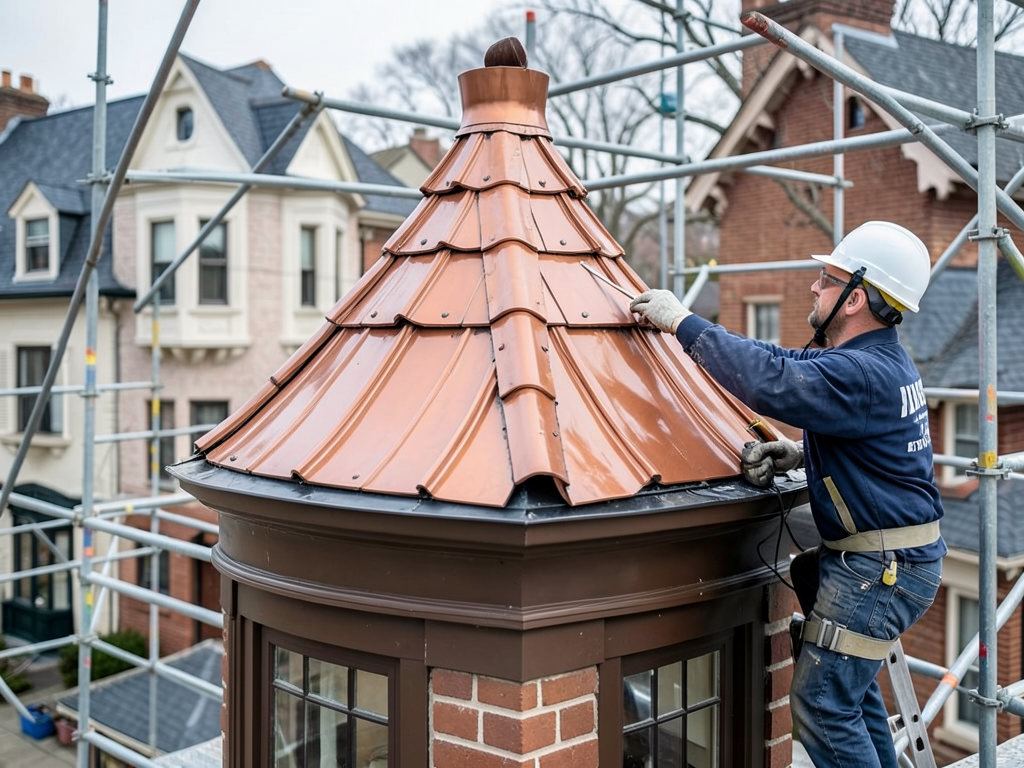
Our flashing systems use 20-ounce copper, not the thin aluminum that fails within a decade. We hand-form custom step flashing for chimney crickets and install ice-and-water barrier along eaves where freeze-thaw damage concentrates. For historic properties, we source salvaged slate or commission custom-cut tiles that match original quarries in Pennsylvania and Vermont. When clients choose faux slate shingles for budget or weight reasons, we specify Class 4 impact-rated products with algae-resistant granules engineered for mid-Atlantic humidity.

Installation follows the vertical bond pattern common to District architecture. We use copper or stainless steel hooks, never nails that split slate during expansion cycles. Each tile overlaps by exactly 3 inches, creating a four-layer barrier against wind-driven rain. Valley installations receive woven copper or formed metal channels that handle the District's intense summer downpours. Our crews understand Historic Preservation Office requirements and coordinate material samples before delivery, avoiding the approval delays that cost other contractors weeks of downtime.

What Happens During Your Slate Roof Installation

Slate & Synthetic Slate Roofing in Washington, D.C. – Historic Preservation Meets Modern Performance
01

Structural Assessment and Planning

We inspect attic framing, measure rafter spacing, and test roof deck attachment. You receive a written load analysis explaining whether your structure supports natural slate roof tiles or requires composite slate roofing. For historic properties, we photograph existing slate patterns and identify matching quarries or suitable imitation slate tiles. This phase includes HPRB application preparation if your neighborhood requires preservation review.
02

Tear-Off and Deck Preparation

Our crews remove existing materials down to sheathing, inspect for rot or insect damage, and replace compromised sections with exterior-grade plywood. We install synthetic underlayment rated for high-temperature exposure and add ice-and-water barrier at vulnerable transition points. All penetrations receive custom copper flashing fabricated on-site. This stage establishes the waterproof foundation that determines slate system longevity.
03

Slate Installation and Finishing

We install authentic slate roofing or faux slate shingles using traditional hook methods, starting at eaves and working upward in staggered courses. Ridge caps receive mortar bedding or mechanical fastening depending on exposure. Final inspection verifies proper overlap, uniform appearance, and flashing integrity. You receive documentation showing material specifications, installation photos, and maintenance guidelines specific to your slate type and District weather patterns.

Why District Homeowners Trust Ace Roofing Washington DC for Slate Work

Slate roofing separates experienced craftsmen from general contractors. We have installed natural slate roof tiles on properties from Shaw to Spring Valley, navigating HPRB approvals, coordinating with adjoining property owners on party wall flashing, and sourcing period-appropriate materials that satisfy preservation requirements. Our crews understand that Capitol Hill's 1880s rowhouses need different detailing than Chevy Chase's 1920s Colonials.

The District's renovation market demands technical precision. We work with structural engineers when load calculations require reinforcement. We coordinate with Historic Preservation architects to document existing conditions and propose compatible solutions. When clients select composite slate roofing to reduce weight and cost, we explain performance differences honestly. Faux slate shingles offer 50-year lifespans and eliminate the spalling issues that affect some natural slate, but they lack the dimensional variation and color depth that define authentic slate roofing.

Our supplier relationships matter. We source slate from quarries in Pennsylvania, Vermont, and Virginia, accessing the same Buckingham and Monson varieties used in the District's historic construction. For synthetic options, we specify products with UV-stable colorants and impact resistance ratings that survive the District's occasional severe thunderstorms. We maintain relationships with salvage yards for matching tiles on partial replacements, avoiding the patchwork appearance that destroys curb appeal. Every installation includes copper flashing and stainless steel fasteners that outlast the slate itself, preventing the premature failures caused by galvanized metal corrosion.

What to Expect from Your Slate Roofing Project

Project Timeline and Scheduling

Slate installations require more time than asphalt projects. A typical District rowhouse takes 7 to 12 days depending on complexity, weather, and material selection. Natural slate roof tiles demand careful handling and precise placement. Composite slate roofing installs faster but still requires proper flashing and underlayment curing time. We schedule around HPRB approval timelines, which add 4 to 8 weeks for properties in historic districts. Our project managers provide weekly updates and coordinate material deliveries through narrow alleys common to Capitol Hill and Georgetown. Weather delays are inevitable during winter months when temperatures drop below freezing.

Initial Inspection and Material Selection

We begin with attic access to examine rafter condition and measure existing roof deck thickness. You receive photos showing structural issues, ventilation deficiencies, and flashing failure points. Our material presentation includes physical samples of authentic slate roofing, faux slate shingles, and imitation slate tiles with detailed comparisons of weight, cost, and lifespan. For historic properties, we provide documentation showing how proposed materials comply with preservation guidelines. This consultation covers color matching, texture requirements, and whether your structure needs reinforcement before installation. You make material decisions with complete information about long-term performance in District conditions.

Finished Roof Performance

Properly installed slate systems deliver decades of maintenance-free service. Natural slate roof tiles last 75 to 150 years depending on quarry source and exposure. Composite slate roofing provides 50-year performance with lighter weight and lower maintenance. Your finished roof sheds water immediately, resists algae growth common to asphalt shingles, and maintains color stability through the District's UV exposure. Copper flashing develops a protective patina that prevents corrosion. Ridge venting eliminates the attic heat buildup that shortens shingle life and drives cooling costs. You receive a roof that increases property value and eliminates the 15-year replacement cycle of conventional materials.

Maintenance and Long-Term Care

Slate roofs need minimal maintenance but benefit from annual inspections. We check for slipped tiles caused by failed hooks, examine flashing for separation at chimneys and valleys, and clear debris from roof-to-wall transitions. Natural slate roof tiles occasionally crack from impact or thermal stress and require individual replacement. Faux slate shingles resist cracking but need monitoring for edge lifting in high-wind areas. We provide maintenance plans that include biannual inspections, gutter cleaning, and priority scheduling for storm damage repairs. Our service records track your roof's condition over time, identifying minor issues before they cause interior water damage.

Frequently Asked Questions

You Have Questions,
We Have Answers

Is slate roofing better than synthetic slate? +

Natural slate offers unmatched durability and authentic appearance, lasting 75 to 100 years in Washington, D.C.'s humid, freeze-thaw climate. It resists moss growth and adds timeless curb appeal to Georgetown rowhouses and Embassy Row estates. Synthetic slate provides a lighter, more affordable alternative with 30 to 50 year lifespans. It requires less structural reinforcement, making it practical for older District homes where roof framing cannot support heavy stone. Synthetic options resist cracking better during rapid temperature shifts common in D.C. winters. Your choice depends on budget, structural capacity, and whether you prioritize longevity or initial cost savings.

How much does a synthetic slate roof cost? +

Synthetic slate roofing typically costs less than natural slate but more than asphalt shingles. Pricing varies based on material quality, roof complexity, and whether your Capitol Hill or Chevy Chase home requires structural reinforcement. Polymer composites generally cost less than rubber blends. Installation on multi-story District rowhouses with steep pitches and valleys increases labor costs. Washington, D.C.'s building code requirements and historic district approvals can add time and expense. Most synthetic slate installations prove cost-effective over time due to reduced maintenance and longer lifespans compared to traditional asphalt. Get multiple quotes from contractors experienced with District-specific permitting and installation challenges.

How long will a synthetic slate roof last? +

Quality synthetic slate roofs last 30 to 50 years in Washington, D.C., depending on material type and installation quality. Polymer composites and advanced rubber blends withstand the District's humidity, freeze-thaw cycles, and occasional severe storms better than basic products. Proper attic ventilation extends lifespan by preventing heat buildup that degrades synthetic materials. Washington, D.C.'s dense tree canopy in neighborhoods like Cleveland Park and Spring Valley means debris accumulation shortens roof life without regular cleaning. UV-resistant formulations perform better under intense summer sun. Professional installation with correct fastener spacing and flashing details proves critical. Expect synthetic slate to outlast asphalt shingles by 10 to 20 years.

Are artificial slates any good? +

Modern artificial slates perform well when you choose quality products and professional installation. Advanced polymer and rubber composites mimic natural slate's appearance while weighing 75 percent less. This matters in Washington, D.C., where many historic homes have framing designed for lighter roofing materials. Artificial slate resists cracking during freeze-thaw cycles better than quarried stone. It handles the District's humidity without absorbing moisture that causes natural slate delamination. Quality synthetic products resist algae growth and maintain color stability under UV exposure. Budget products disappoint with fading and brittleness. Verify manufacturer warranties and check references from installations in the greater Washington, D.C. metro area before committing.

What are the downsides of slate roofing? +

Natural slate roofing weighs 800 to 1,500 pounds per square, requiring structural reinforcement in many Washington, D.C. homes, especially older rowhouses and bungalows. Installation costs run significantly higher than alternatives due to specialized labor and material expenses. Slate proves brittle, cracking under foot traffic during maintenance or satellite dish installation. Washington, D.C.'s freeze-thaw cycles cause some slate types to delaminate over time. Replacement tiles must match the original quarry source, creating delays and higher repair costs. Despite 75 to 100 year lifespans, flashing and underlayment fail sooner, requiring partial tear-offs. Walking on slate roofs damages tiles, complicating chimney inspections common in District homes.

What happens if slate gets wet? +

Natural slate absorbs minimal water due to its dense stone composition, typically less than 0.25 percent by weight. This low absorption rate prevents freeze-thaw damage in Washington, D.C.'s winter climate. Water runs off properly installed slate quickly, protecting the underlayment and deck. Problems occur when slate delaminates or cracks develop, allowing moisture to penetrate. The District's humidity and summer storms can expose failing underlayment through damaged tiles. Moss and algae growth on north-facing slopes in shaded neighborhoods like Forest Hills trap moisture against the slate surface. Proper flashing around chimneys and valleys prevents water intrusion at vulnerable points. Wet slate becomes slippery, making inspections dangerous.

What is the longest lasting slate roof? +

Welsh and certain Vermont quarry slates last 100 to 175 years under ideal conditions. Hard slate varieties resist weathering in Washington, D.C.'s climate better than soft slates. The longest-lasting installations feature proper roof pitch, adequate attic ventilation, and correct installation techniques. Historic District homes along Massachusetts Avenue showcase century-old slate roofs still protecting structures. However, underlayment, flashing, and fasteners fail long before the slate itself, typically requiring replacement after 40 to 60 years. This necessitates careful slate removal and reinstallation, adding cost. Lifespan depends on slate quality, installation craftsmanship, and maintenance. Most synthetic alternatives last 30 to 50 years maximum.

Do slate roofs increase home value? +

Slate roofs increase home value in Washington, D.C., particularly in upscale neighborhoods like Kalorama and Wesley Heights where buyers expect premium materials. Real slate signals quality construction and reduces future replacement costs, appealing to discerning buyers. The aesthetic matches the District's architectural character, especially in historic districts. However, returns vary based on neighborhood expectations and buyer demographics. Synthetic slate offers moderate value increases at lower initial investment. Appraisers consider remaining roof life when assessing value. A new slate roof on a Georgetown rowhouse adds more resale appeal than the same installation in emerging neighborhoods. Work with contractors familiar with D.C. historic preservation guidelines to protect property values.

What is the best slate roof material? +

Hard slate varieties from Vermont, Welsh, and Canadian quarries provide the best performance and longevity. Look for S1 grade slate with low water absorption and high density. For Washington, D.C.'s climate, choose slate rated for severe weathering exposure. Unfading colors like gray, black, and green maintain appearance longer than red and purple tones. Among synthetics, composite polymer products outperform rubber alternatives in UV resistance and impact strength. The best material depends on your structural capacity, budget, and aesthetic goals. Historic district regulations in areas like Capitol Hill may require specific slate types or colors. Verify products meet ASTM standards and carry transferable warranties before installation.

What are the disadvantages of synthetic roof underlayment? +

Synthetic roof underlayment costs more upfront than traditional felt paper. Some products become slippery when wet, creating safety hazards during installation on steep District rowhouse roofs. Certain synthetics degrade under prolonged UV exposure if left uncovered during construction delays common with Washington, D.C. permitting. Installation requires careful attention to manufacturer specifications for fastener types and overlap details. Low-quality synthetic underlayments may not breathe properly, trapping moisture in poorly ventilated attics typical of older D.C. homes. Temperature sensitivity causes some products to wrinkle or buckle. Despite drawbacks, quality synthetic underlayments outlast felt and resist tearing, making them worthwhile for long-term synthetic slate installations requiring 30 to 50 year protection.

How District Historic Codes Shape Slate Roofing Decisions

The Historic Preservation Review Board governs renovations in 23 District neighborhoods, including Capitol Hill, Georgetown, and Dupont Circle. Any visible roofing change requires HPRB approval, which means your slate selection must match original materials in color, texture, and installation pattern. Natural slate roof tiles typically receive automatic approval when sourcing matches documented quarries. Composite slate roofing and imitation slate tiles face stricter scrutiny. The board evaluates product samples against existing facades and can reject materials that lack dimensional variation or exhibit synthetic sheen. This regulatory environment makes material selection a critical first step, not an afterthought.

Ace Roofing Washington DC maintains working relationships with preservation architects and HPRB staff, streamlining the approval process for slate projects. We document existing roof conditions with measured drawings and historical research showing original material specifications. Our project files include approved slate sources and synthetic alternatives that have passed HPRB review on similar properties. This institutional knowledge prevents the costly mistakes that occur when contractors propose inappropriate materials or skip required approvals. District property owners need roofing partners who understand that historic compliance protects property values and avoids enforcement actions that halt construction mid-project.
Roofing Services in The Washington DC Area

We are proud to serve the entire Washington DC metropolitan area, including all surrounding neighborhoods and communities. Our central location allows us to dispatch our expert teams quickly for emergency repairs or scheduled consultations. Whether you're in Dupont Circle, Georgetown, Capitol Hill, or beyond, we bring premier, trustworthy roofing services directly to your doorstep. View our service area map below to confirm we cover your specific location and then call us to get started on your project.

Address:
Ace Roofing Washington DC, 20 F St NW, Washington, DC, 20001

Additional Services We Offer

Our news updates

Latest Articles & News from The Blogs

How Poor Roof Drainage Can Ruin Your Landscaping in Cathedral Heights Heavy rainstorms in Washington DC create serious challenges for…

How Poor Roof Drainage Can Ruin Your Landscaping in Cathedral Heights

How Poor Roof Drainage Can Ruin Your Landscaping in Cathedral Heights Heavy rainstorms in Washington DC create serious challenges for…

Why You Should Never Install a New Roof Over Your Old Shingles in Hill East

Why Roof Overlays Are a Short-Term Gamble in Hill East Homeowners in Hill East often face a choice when their…

A Homeowner Guide to Comparing Different Roofing Quotes in Washington DC

A Homeowner Guide to Comparing Different Roofing Quotes in Washington DC Getting multiple roofing quotes in Washington DC can feel…

Contact Us

Get a detailed structural assessment and material recommendations for your District property. Call (771) 240-3300 now to discuss natural slate roof tiles, composite slate roofing, or synthetic alternatives that meet Historic Preservation requirements and deliver century-class performance.