
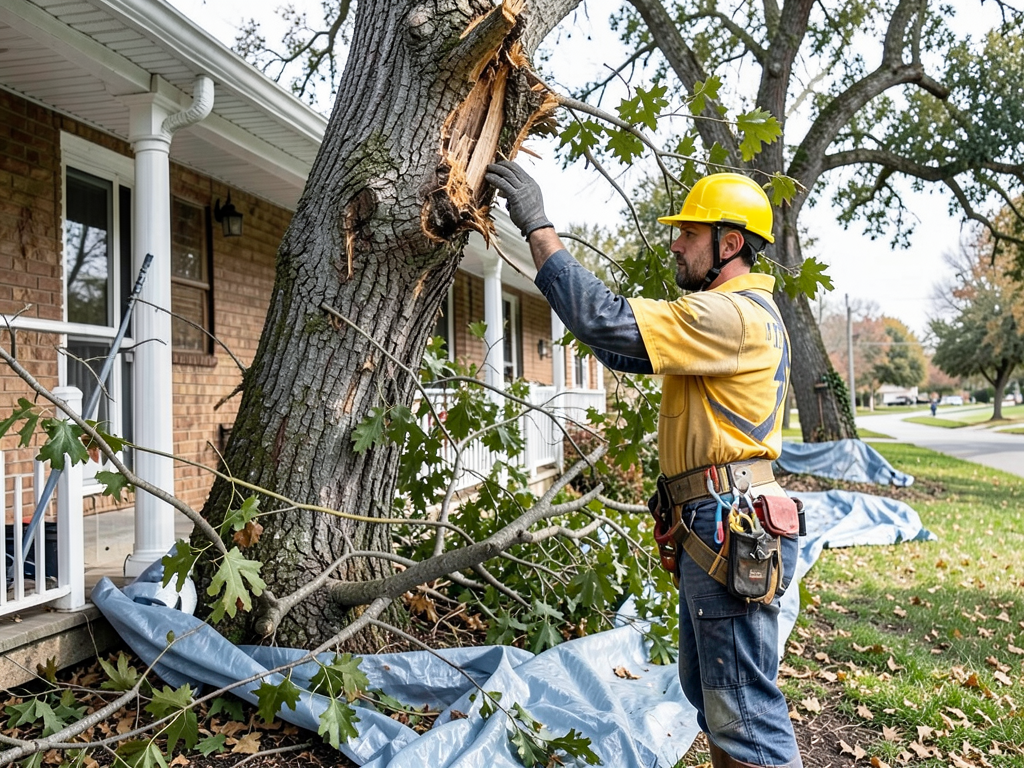
What to Do Immediately After a Tree Falls on Your Roof in Kingman Park
A massive oak just crashed through your roof during last night’s storm. The ceiling is leaking, the attic is filling with water, and you’re standing in your Kingman Park living room wondering what to do next. Here’s your immediate action plan.. Read more about Repairing Wind and Storm Damage to Your Langdon Home.
Step 1: Safety First – Get Everyone Out of the House
Tree damage creates immediate hazards. The weight of the tree can cause ceiling collapse, electrical wires may be exposed, and gas lines could be compromised. Evacuate everyone including pets to a safe distance across the street or to a neighbor’s house. Do not attempt to enter the damaged area to retrieve belongings.
Call 911 if: You smell gas, see sparks from electrical wires, or notice structural walls cracking. Utility companies need to shut off services before any repair work begins.
Step 2: Document Everything Before Touching Anything
Take photos and videos of the damage from multiple angles using your phone. Capture the tree position, roof penetration points, water damage, and any structural cracks. This documentation becomes critical for your insurance claim with State Farm, Allstate, or your provider.. Read more about Navigating a Roofing Insurance Claim After a Severe Storm in Woodridge.
Write down the time you discovered the damage and the weather conditions. Note if any branches are touching power lines – this requires special utility company coordination before removal.
Step 3: Contact Your Insurance Company Immediately
Call your homeowners insurance claims department within 24 hours. Most policies cover tree damage if the tree fell due to wind, lightning, or other covered perils. DC-area insurers typically require you to mitigate further damage, so mention you’re arranging emergency tarping. DC Urban Forestry Division.
Ask about your deductible and whether you need multiple estimates. Some Kingman Park homes in historic districts may require specific materials for repairs, which can affect coverage. Navigating Historic Preservation Roofing Rules in Dupont Circle.
Step 4: Call a 24/7 Emergency Roofer Who Handles Tree Damage
Standard roofing companies won’t have the equipment or expertise to remove a tree and repair the roof. You need a contractor who coordinates with certified arborists and crane services. DC rowhouses in Kingman Park often require crane access through narrow alleys – not every company has this capability. Why Your Capitol Hill Rowhouse Needs a Specialized Flat Roof System.
Call (771) 240-3300 now for immediate dispatch. We’ll send a crew to assess the damage within 90 minutes and coordinate the complete tree removal and roof repair process.
Step 5: Temporary Damage Control While Waiting
If it’s safe to do so, move valuable items away from the damaged area. Place buckets under active leaks. Do not climb on the roof – wet surfaces and hidden structural damage make this extremely dangerous.
Turn off your HVAC system to prevent drawing contaminated air into ducts. If water is near electrical outlets, shut off power at the breaker box if you can access it safely from outside.
Understanding DC Tree Removal Regulations
Washington DC’s Urban Forestry Division regulates tree removal, especially for trees over 44 inches in circumference or designated as “heritage trees.” In Kingman Park, many mature oaks and maples fall under these protections. The Real Cost of a Roof Replacement for Washington DC Homeowners.
Emergency tree removal on private property typically doesn’t require permits if there’s immediate danger to life or property. However, the tree service must document the emergency and submit paperwork within 15 days.
DC Code 11-2601 requires that any tree removal be done by ISA-certified arborists. The crane operation itself must comply with OSHA regulations and may require temporary street closures in Kingman Park’s narrow residential blocks.
Common Structural Damage Patterns After Tree Impact
Tree strikes typically cause three types of damage: direct penetration where branches break through sheathing, load-bearing stress on rafters and trusses, and collateral damage to adjacent roofing sections.
Diagnostic indicators of serious structural damage:
- Cracked drywall around door frames or windows
- Doors that suddenly stick or won’t close properly
- Visible sagging in ceiling areas away from the impact point
- Water stains spreading beyond the initial leak area
A structural engineer assessment may be required if you notice any of these signs. The weight of a mature oak can exceed 10,000 pounds, creating forces that compromise roof framing even without direct penetration.
Insurance Claim Documentation Requirements
Your insurance adjuster will need specific documentation to process your claim efficiently. Keep all receipts for emergency services, temporary housing if needed, and mitigation efforts.
DC-area insurers typically require:
- Photos of the tree before removal (if possible)
- Documentation of pre-existing roof condition
- Two written estimates for repairs
- Proof of coordination with utility companies if services were interrupted
Most policies cover tree removal costs up to $1,000, but the structural repairs and water damage restoration are usually covered at full replacement cost minus your deductible.
Why Kingman Park Homes Face Unique Challenges
Kingman Park’s mature tree canopy, while beautiful, creates specific risks during DC’s severe weather events. The neighborhood’s mix of historic bungalows and newer construction means varying roof structures and attachment methods.
Many Kingman Park homes built before 1950 have plank sheathing rather than modern plywood, which affects how tree impacts create damage patterns. The older wood can splinter dramatically under impact, creating larger openings than similar strikes on newer homes.. Read more about The Best Gutter Systems for Homes Surrounded by Mature Oaks in Forest Hills.
The neighborhood’s proximity to RFK Stadium and the Anacostia River corridor means it experiences slightly higher wind velocities during storms. The National Weather Service’s Baltimore/Washington office tracks these microclimatic variations that affect tree failure rates. National Association of Certified Home Inspectors.
Emergency Tarping Process and Timeline
Proper emergency tarping prevents additional water damage while permanent repairs are scheduled. The process typically takes 2-4 hours depending on weather conditions and roof accessibility.
Emergency tarping steps:
- Remove all loose debris and assess structural integrity
- Install 2×4 battens around the damaged area perimeter
- Stretch heavy-duty woven poly tarp over the damaged section
- Secure tarp with additional 2x4s screwed through the tarp into the roof deck
- Seal edges with roofing cement to prevent wind uplift
The tarp must extend at least 3 feet beyond the damaged area on all sides. In Kingman Park’s rowhouse configuration, this often means working from adjacent properties or using specialized equipment to access tight spaces.
Choosing the Right Contractor for Tree and Roof Damage
Not all roofing companies can handle tree damage restoration. You need a contractor with specific capabilities:
- 24/7 emergency dispatch and rapid response times
- Coordination with certified arborists and crane services
- Experience with DC building codes and historic district requirements
- Insurance claim documentation expertise
- Ability to handle both emergency mitigation and permanent repairs
Ask potential contractors about their experience with similar projects in Kingman Park specifically. The rowhouse architecture and narrow streets create access challenges that not every company can manage.
Preventing Future Tree-Related Roof Damage
While you can’t prevent every tree failure, regular maintenance reduces your risk. DC’s Urban Forestry Division recommends professional tree assessment every 3-5 years for mature trees near structures. The Best Flat Roof Maintenance Tips for Petworth Homeowners.
Warning signs of unstable trees:
- Dead or hanging branches in the canopy
- Fungal growth on the trunk or major roots
- Soil heaving or mounding around the base
- Recent construction disturbing root systems
- Significant lean developing over time
Kingman Park residents should also consider the species of trees near their homes. Fast-growing trees like silver maple and Bradford pear are more prone to storm failure than slower-growing oaks and hickories.
Cost Factors for Tree Damage Restoration
The total cost varies significantly based on several factors. Emergency services typically start around $2,500 for initial assessment and tarping, with complete restoration ranging from $8,000 to $25,000 or more.
Key cost variables:
- Tree size and removal complexity
- Roof size and material type
- Structural damage extent
- Water damage to interior finishes
- Historic district material requirements
Insurance typically covers damage from fallen trees if they were healthy and fell due to covered perils. Damage from neglected or dead trees may be denied if regular maintenance was neglected.
Frequently Asked Questions
How long can I wait before tarping a damaged roof?
Water damage accelerates rapidly – significant additional damage can occur within 24-48 hours. Even temporary tarping within the first day can prevent thousands in secondary damage costs.
Will my insurance cover the entire cost?
Most policies cover tree damage from covered perils at replacement cost minus your deductible. However, damage from neglected trees or earth movement may be excluded. Check your specific policy details.
Can I remove the tree myself to save money?
No. DIY tree removal on a structure is extremely dangerous and can cause additional damage. Professional arborists use specialized techniques and equipment to safely remove trees from buildings.
What if the tree was from my neighbor’s yard?
Generally, you’re responsible for damage from trees on your property regardless of origin. However, if your neighbor knew their tree was hazardous and didn’t address it, they might share liability. Document everything and let insurance handle the determination.
Don’t Wait – Call Now for Emergency Response
Every hour counts after tree damage. Water continues to penetrate, structural damage worsens, and mold begins growing within 24-48 hours. Our team is ready to respond to Kingman Park and surrounding DC neighborhoods 24/7. How to Get Your Roof Ready for a DC Winter in Chevy Chase.
Call (771) 240-3300 immediately for emergency dispatch. We’ll coordinate the complete process from tree removal through final repairs, working directly with your insurance company to streamline your claim.
Kingman Park residents have trusted us for over 15 years to handle their most challenging roofing emergencies. We understand the unique needs of DC’s historic and modern homes and maintain all required DC licenses and insurance.
Don’t let tree damage turn into a nightmare. Pick up the phone and call (771) 240-3300 before the next storm hits. Your home deserves expert care from professionals who understand DC’s specific building requirements and can handle every aspect of the restoration process.
{
“@context”: “https://schema.org”,
“@type”: “BlogPosting”,
“headline”: “What to Do Immediately After a Tree Falls on Your Roof in Kingman Park”,
“description”: “A tree just hit your Kingman Park roof. Here’s your emergency action plan for safety, tarping, insurance, and finding a 24/7 DC roofer who can handle both tree removal and repairs.”,
“wordCount”: 1650,
“datePublished”: “2026-04-15T06:50:00.000Z”,
“dateModified”: “2026-04-15T06:50:00.000Z”,
“inLanguage”: “en-US”,
“mainEntityOfPage”: {
“@type”: “WebPage”,
“@id”: “https://aceroofingwashingtondc.com”
},
“publisher”: {
“@type”: “LocalBusiness”,
“name”: “Ace Roofing Washington DC”,
“url”: “https://aceroofingwashingtondc.com”
},
“author”: {
“@type”: “Organization”,
“name”: “Ace Roofing Washington DC”,
“url”: “https://aceroofingwashingtondc.com”
},
“image”: {
“@type”: “ImageObject”,
“url”: “https://aceroofingwashingtondc.com/wp-content/uploads/2026/03/what-to-do-immediately-after-a-tree-falls-on-your-1.png”
}
}
{
“@context”: “https://schema.org”,
“@type”: “RoofingContractor”,
“name”: “Ace Roofing Washington DC”,
“url”: “https://aceroofingwashingtondc.com”,
“address”: {
“@type”: “PostalAddress”,
“addressLocality”: “Washington DC”
},
“areaServed”: {
“@type”: “City”,
“name”: “Washington DC”
}
}
{
“@context”: “https://schema.org”,
“@type”: “FAQPage”,
“mainEntity”: [
{
“@type”: “Question”,
“name”: “How long can I wait before tarping a damaged roof?”,
“acceptedAnswer”: {
“@type”: “Answer”,
“text”: “Water damage accelerates rapidly – significant additional damage can occur within 24-48 hours. Even temporary tarping within the first day can prevent thousands in secondary damage costs.”
}
},
{
“@type”: “Question”,
“name”: “Will my insurance cover the entire cost?”,
“acceptedAnswer”: {
“@type”: “Answer”,
“text”: “Most policies cover tree damage from covered perils at replacement cost minus your deductible. However, damage from neglected trees or earth movement may be excluded. Check your specific policy details.”
}
},
{
“@type”: “Question”,
“name”: “Can I remove the tree myself to save money?”,
“acceptedAnswer”: {
“@type”: “Answer”,
“text”: “No. DIY tree removal on a structure is extremely dangerous and can cause additional damage. Professional arborists use specialized techniques and equipment to safely remove trees from buildings.”
}
},
{
“@type”: “Question”,
“name”: “What if the tree was from my neighbor’s yard?”,
“acceptedAnswer”: {
“@type”: “Answer”,
“text”: “Generally, you’re responsible for damage from trees on your property regardless of origin. However, if your neighbor knew their tree was hazardous and didn’t address it, they might share liability. Document everything and let insurance handle the determination.”
}
}
]
}
{
“@context”: “https://schema.org”,
“@type”: “BreadcrumbList”,
“itemListElement”: [
{
“@type”: “ListItem”,
“position”: 1,
“name”: “Home”,
“item”: “https://aceroofingwashingtondc.com”
},
{
“@type”: “ListItem”,
“position”: 2,
“name”: “Blog”,
“item”: “https://aceroofingwashingtondc.com/blog”
},
{
“@type”: “ListItem”,
“position”: 3,
“name”: “What to Do Immediately After a Tree Falls on Your Roof in Kingman Park”
}
]
}
{
“@context”: “https://schema.org”,
“@type”: “Service”,
“serviceType”: “Roofing”,
“provider”: {
“@type”: “LocalBusiness”,
“name”: “Ace Roofing Washington DC”,
“url”: “https://aceroofingwashingtondc.com”
},
“areaServed”: {
“@type”: “City”,
“name”: “Washington DC”
},
“description”: “A tree just hit your Kingman Park roof. Here’s your emergency action plan for safety, tarping, insurance, and finding a 24/7 DC roofer who can handle both tree removal and repairs.”
}