
How to Stop Squirrels and Raccoons from Nesting in Your Manor Park Roof
Squirrels and raccoons are more than just a nuisance in Manor Park. These urban wildlife pests can cause serious damage to your roof by chewing through shingles, tearing up fascia boards, and nesting in your attic. The problem is especially common in older DC neighborhoods where mature trees provide easy access to rooftops. If you hear scratching sounds in your attic or notice damaged shingles near your roof edges, you likely have unwanted guests. The good news is that with proper exclusion techniques and timely repairs, you can protect your home from these destructive animals while keeping them safe and unharmed. DC Department of Energy and Environment.
Common Signs of Squirrel and Raccoon Roof Damage
Identifying wildlife damage early can save you thousands in repair costs. Look for these telltale signs around your Manor Park home:. Read more about Identifying the Early Signs of Attic Mold and Moisture in Shepherd Park Houses.
- Chewed or missing shingles, especially near roof edges and vents
- Visible claw marks on fascia boards and soffits
- Accumulated droppings in attic spaces or near roof access points
- Insulation that appears matted or disturbed
- Strange noises in your attic, particularly during early morning or evening hours
- Visible entry holes around roof vents, chimneys, or eaves
Squirrels typically create smaller entry points about 2-3 inches in diameter, while raccoons need larger openings around 4-6 inches. Both animals are excellent climbers and can scale trees or downspouts to reach your roof. Once inside, they can destroy wiring, damage HVAC ducts, and create fire hazards by chewing through electrical insulation.
Why Manor Park Homes Are Vulnerable to Roof Pests
Manor Park’s mature tree canopy and older housing stock create the perfect conditions for wildlife roof damage. Many homes in this Northwest DC neighborhood were built between the 1930s and 1950s, featuring wooden fascia boards and soffits that are easier for animals to chew through than modern materials. The neighborhood’s proximity to Rock Creek Park provides a natural habitat for squirrels and raccoons, while its established tree-lined streets offer convenient pathways to your roof. DC Department of Buildings.
According to DC Department of Energy and Environment wildlife management guidelines, urban squirrels and raccoons adapt quickly to human environments, often seeking shelter in attics during breeding season from March through June. The area’s clay-heavy soil, common throughout Northwest DC, doesn’t directly affect roof pests but contributes to the neighborhood’s mature tree growth, which indirectly provides more access points to your roof.
DC Building Code Requirements for Wildlife Exclusion
When repairing pest damage in Washington DC, you must comply with both building codes and wildlife protection laws. The DC Construction Code requires that all roof repairs meet current standards for weather resistance and structural integrity. For homes in historic districts, the DC Historic Preservation Office may require approval before making exterior modifications. The Real Cost of a Roof Replacement for Washington DC Homeowners.
DC law also protects certain wildlife species. While squirrels and raccoons are not protected, you must use humane exclusion methods rather than trapping and relocation, which can spread disease. The International Building Code, adopted by DC, requires that all roof penetrations be properly sealed with materials rated for the specific application. This means using galvanized steel flashing, heavy-duty mesh screening, or commercial-grade vent covers rather than temporary fixes.
Step-by-Step Roof Pest Damage Repair Process
Professional roof pest damage repair follows a specific process to ensure the problem doesn’t return. Here’s what you can expect:
- Comprehensive Inspection
Technicians examine your entire roof system, attic spaces, and exterior walls to identify all entry points and damage. This includes checking for chewed wiring, damaged insulation, and moisture problems caused by pest entry.
- Humane Wildlife Exclusion
Before repairs begin, all animals must be safely excluded using one-way doors or professional trapping services. This prevents sealing animals inside your home.
- Structural Repairs
Damaged shingles, fascia boards, and soffits are replaced with pest-resistant materials. All entry points are sealed using galvanized steel or commercial-grade materials that animals cannot chew through.. Read more about The Importance of Healthy Soffit and Fascia Boards for Homes in Benning Ridge.
- Attic Remediation
Contaminated insulation is removed and replaced. Any damaged wiring is repaired by a licensed electrician to prevent fire hazards.
- Prevention Reinforcement
Final steps include installing chimney caps, vent screens, and gutter guards to prevent future access. Tree branches within 6-8 feet of your roof should be trimmed back.
Cost Comparison: Repair vs. Prevention
Understanding the costs involved can help you make informed decisions about your roof pest prevention strategy. Here’s how different approaches compare:
| Service Type | Typical Cost Range | Duration | Effectiveness |
|---|---|---|---|
| Basic Inspection Only | $150-300 | 1-2 hours | Identifies problems |
| Entry Point Sealing | $500-1,500 | 1 day | Prevents new entry |
| Full Damage Repair | $2,000-8,000 | 2-5 days | Restores integrity |
| Prevention System | $1,000-3,000 | 1-2 days | Long-term protection |
The most cost-effective approach is comprehensive prevention after initial repairs. A complete system including vent guards, chimney caps, and reinforced entry points typically costs more upfront but prevents expensive repeat damage.
DIY vs. Professional Roof Pest Repair
While some homeowners attempt DIY pest exclusion, professional repair offers significant advantages. Here’s a comparison:
| Aspect | DIY Approach | Professional Service |
|---|---|---|
| Safety | High risk of falls | Proper safety equipment |
| Effectiveness | Often incomplete | Comprehensive solution |
| Code Compliance | May violate codes | Meets all requirements |
| Insurance Coverage | Often denied | Documented repairs |
| Long-term Cost | Higher (repeat damage) | Lower (prevention focus) |
Professional roofers have the experience to identify all damage points, use proper materials, and ensure repairs meet building codes. They also understand local wildlife laws and can recommend the most effective prevention strategies for your specific situation.
Preventing Future Roof Pest Problems
After repairing existing damage, prevention is your best defense against future pest problems. Here are the most effective strategies:
- Install Heavy-Duty Vent Covers – Replace standard plastic vent covers with galvanized steel versions that animals cannot chew through
- Trim Tree Branches – Keep all branches at least 6-8 feet from your roof to eliminate easy access paths
- Repair Damaged Fascia Immediately – Rotting or damaged wood attracts pests and provides easy entry points
- Install Chimney Caps – Professional-grade caps prevent both animals and water from entering your chimney
- Clean Gutters Regularly – Debris-filled gutters provide nesting materials and water sources for pests
- Schedule Annual Inspections – Professional inspections can catch early signs of pest activity before major damage occurs
Using pest-resistant materials during repairs provides long-term protection. Modern composite fascia boards and PVC soffits resist chewing better than traditional wood. Metal flashing and commercial-grade mesh screening create barriers that even determined raccoons cannot penetrate. Metal Roof vs Asphalt Shingles Cost.
Insurance Considerations for Roof Pest Damage
Most standard homeowners insurance policies in Washington DC do not cover damage caused by rodents or wildlife. However, if the damage results from a covered peril like a storm that created entry points, you may have coverage for the resulting pest damage.
The DC Department of Insurance, Securities and Banking recommends documenting all damage with photos and professional inspection reports before filing any claims. Some insurance companies offer optional endorsements for pest damage, which can be worth considering if you live in an area with high wildlife activity.
Professional repair companies can provide detailed documentation that may help with insurance claims, even when the damage itself isn’t covered. This documentation proves the extent of damage and the necessity of repairs, which can be valuable for future claims or when selling your home.
When to Call for Emergency Roof Pest Repair
Some situations require immediate professional attention to prevent further damage or safety hazards:
- Active water leaks caused by pest entry points
- Visible electrical damage or chewed wiring
- Large animals trapped in your attic or walls
- Structural damage that compromises roof integrity
- Health hazards from accumulated animal waste
Emergency services typically cost more but can prevent thousands in additional damage. Most professional roofers offer 24/7 emergency response for situations that threaten your home’s safety or integrity.
Frequently Asked Questions
How can I tell if squirrels or raccoons are in my attic?
Listen for scratching, scurrying, or thumping sounds, especially during early morning or evening hours. Look for droppings, chewed wires, or damaged insulation in your attic. You may also notice torn shingles or damaged roof vents from the outside.
Is it legal to trap and remove wildlife in Washington DC?
DC law requires humane exclusion methods rather than trapping and relocation. You should hire a licensed professional who understands local wildlife regulations and can safely remove animals without causing harm or spreading disease.
How much does professional roof pest damage repair cost?
Costs vary widely based on damage extent, but basic entry point sealing typically costs $500-1,500, while comprehensive repairs including structural damage can range from $2,000-8,000. Prevention systems add $1,000-3,000 to the total cost.
Can I prevent squirrels and raccoons from getting on my roof?
Yes, through a combination of trimming tree branches, installing pest-resistant vent covers and chimney caps, and using heavy-duty materials for fascia and soffit repairs. Professional prevention systems offer the best long-term protection.
How long does roof pest damage repair take?
Simple repairs might take one day, while comprehensive damage repair and prevention can take 2-5 days. Emergency repairs are typically completed within 24-48 hours of your call.

Photo of common roof entry points showing chewed shingles, damaged fascia, and vent covers that need replacement
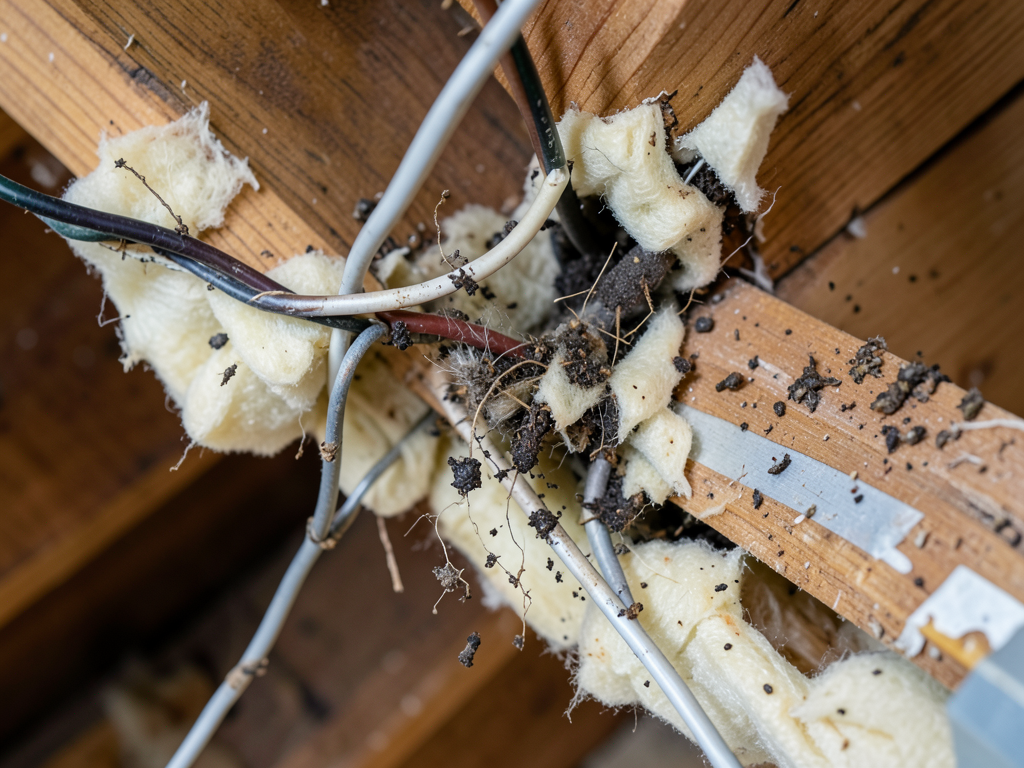
Technician performing inspection of attic space showing insulation damage, chewed wiring, and pest droppings
Before and after comparison of pest damage repair showing sealed entry points and new pest-resistant materials
Protect Your Manor Park Home Today
Squirrel and raccoon damage to your roof won’t fix itself. Every day you wait, these pests can cause more expensive damage to your home’s structure, electrical systems, and insulation. The mature trees and older homes in Manor Park create perfect conditions for wildlife roof damage, but you don’t have to let pests destroy your investment.
Professional roof pest damage repair combines humane wildlife exclusion with structural repairs that meet all DC building codes. Our technicians understand the specific challenges of older DC homes and use materials that prevent animals from returning. From comprehensive inspections to final prevention systems, we handle every aspect of roof pest damage restoration.
Don’t let squirrels and raccoons turn your attic into their nesting ground. Call (771) 240-3300 today to schedule your professional roof inspection and get a free estimate on repairs. Our team serves all of Washington DC, including Manor Park, and we offer emergency services when you need immediate help. Pick up the phone and call (771) 240-3300 before the next storm hits and existing damage gets worse.
{
“@context”: “https://schema.org”,
“@type”: “BlogPosting”,
“headline”: “How to Stop Squirrels and Raccoons from Nesting in Your Manor Park Roof”,
“description”: “Stop squirrels and raccoons from damaging your Manor Park roof. Learn how to identify pest entry points, prevent wildlife damage, and restore your roof’s integrity.”,
“wordCount”: 1738,
“datePublished”: “2026-03-29T12:10:00.000Z”,
“dateModified”: “2026-03-29T12:10:00.000Z”,
“inLanguage”: “en-US”,
“mainEntityOfPage”: {
“@type”: “WebPage”,
“@id”: “https://aceroofingwashingtondc.com”
},
“publisher”: {
“@type”: “LocalBusiness”,
“name”: “Ace Roofing Washington DC”,
“url”: “https://aceroofingwashingtondc.com”
},
“author”: {
“@type”: “Organization”,
“name”: “Ace Roofing Washington DC”,
“url”: “https://aceroofingwashingtondc.com”
},
“image”: {
“@type”: “ImageObject”,
“url”: “https://aceroofingwashingtondc.com/wp-content/uploads/2026/03/how-to-stop-squirrels-and-raccoons-from-nesting-in-1.png”
}
}
{
“@context”: “https://schema.org”,
“@type”: “RoofingContractor”,
“name”: “Ace Roofing Washington DC”,
“url”: “https://aceroofingwashingtondc.com”,
“address”: {
“@type”: “PostalAddress”,
“addressLocality”: “Washington DC”
},
“areaServed”: {
“@type”: “City”,
“name”: “Washington DC”
}
}
{
“@context”: “https://schema.org”,
“@type”: “FAQPage”,
“mainEntity”: [
{
“@type”: “Question”,
“name”: “How can I tell if squirrels or raccoons are in my attic?”,
“acceptedAnswer”: {
“@type”: “Answer”,
“text”: “Listen for scratching, scurrying, or thumping sounds, especially during early morning or evening hours. Look for droppings, chewed wires, or damaged insulation in your attic. You may also notice torn shingles or damaged roof vents from the outside.”
}
},
{
“@type”: “Question”,
“name”: “Is it legal to trap and remove wildlife in Washington DC?”,
“acceptedAnswer”: {
“@type”: “Answer”,
“text”: “DC law requires humane exclusion methods rather than trapping and relocation. You should hire a licensed professional who understands local wildlife regulations and can safely remove animals without causing harm or spreading disease.”
}
},
{
“@type”: “Question”,
“name”: “How much does professional roof pest damage repair cost?”,
“acceptedAnswer”: {
“@type”: “Answer”,
“text”: “Costs vary widely based on damage extent, but basic entry point sealing typically costs $500-1,500, while comprehensive repairs including structural damage can range from $2,000-8,000. Prevention systems add $1,000-3,000 to the total cost.”
}
},
{
“@type”: “Question”,
“name”: “Can I prevent squirrels and raccoons from getting on my roof?”,
“acceptedAnswer”: {
“@type”: “Answer”,
“text”: “Yes, through a combination of trimming tree branches, installing pest-resistant vent covers and chimney caps, and using heavy-duty materials for fascia and soffit repairs. Professional prevention systems offer the best long-term protection.”
}
},
{
“@type”: “Question”,
“name”: “How long does roof pest damage repair take?”,
“acceptedAnswer”: {
“@type”: “Answer”,
“text”: “Simple repairs might take one day, while comprehensive damage repair and prevention can take 2-5 days. Emergency repairs are typically completed within 24-48 hours of your call.”
}
}
]
}
{
“@context”: “https://schema.org”,
“@type”: “HowTo”,
“name”: “Roof Pest Damage Repair Process”,
“step”: [
{
“@type”: “HowToStep”,
“position”: 1,
“name”: “Comprehensive Inspection”,
“text”: “Technicians examine your entire roof system, attic spaces, and exterior walls to identify all entry points and damage. This includes checking for chewed wiring, damaged insulation, and moisture problems caused by pest entry.”
},
{
“@type”: “HowToStep”,
“position”: 2,
“name”: “Humane Wildlife Exclusion”,
“text”: “Before repairs begin, all animals must be safely excluded using one-way doors or professional trapping services. This prevents sealing animals inside your home.”
},
{
“@type”: “HowToStep”,
“position”: 3,
“name”: “Structural Repairs”,
“text”: “Damaged shingles, fascia boards, and soffits are replaced with pest-resistant materials. All entry points are sealed using galvanized steel or commercial-grade materials that animals cannot chew through.”
},
{
“@type”: “HowToStep”,
“position”: 4,
“name”: “Attic Remediation”,
“text”: “Contaminated insulation is removed and replaced. Any damaged wiring is repaired by a licensed electrician to prevent fire hazards.”
},
{
“@type”: “HowToStep”,
“position”: 5,
“name”: “Prevention Reinforcement”,
“text”: “Final steps include installing chimney caps, vent screens, and gutter guards to prevent future access. Tree branches within 6-8 feet of your roof should be trimmed back.”
}
],
“image”: “https://aceroofingwashingtondc.com/wp-content/uploads/2026/03/how-to-stop-squirrels-and-raccoons-from-nesting-in-1.png”
}
{
“@context”: “https://schema.org”,
“@type”: “BreadcrumbList”,
“itemListElement”: [
{
“@type”: “ListItem”,
“position”: 1,
“name”: “Home”,
“item”: “https://aceroofingwashingtondc.com”
},
{
“@type”: “ListItem”,
“position”: 2,
“name”: “Blog”,
“item”: “https://aceroofingwashingtondc.com/blog”
},
{
“@type”: “ListItem”,
“position”: 3,
“name”: “How to Stop Squirrels and Raccoons from Nesting in Your Manor Park Roof”
}
]
}
{
“@context”: “https://schema.org”,
“@type”: “Service”,
“serviceType”: “Roofing”,
“provider”: {
“@type”: “LocalBusiness”,
“name”: “Ace Roofing Washington DC”,
“url”: “https://aceroofingwashingtondc.com”
},
“areaServed”: {
“@type”: “City”,
“name”: “Washington DC”
},
“description”: “Stop squirrels and raccoons from damaging your Manor Park roof. Learn how to identify pest entry points, prevent wildlife damage, and restore your roof’s integrity.”
}