
Identifying the Early Signs of Attic Mold and Moisture in Shepherd Park Houses
Attic mold and moisture problems in Shepherd Park homes often start with small warning signs that homeowners miss until the damage becomes extensive. Shepherd Park’s historic homes built between the 1920s and 1950s feature classic construction methods that, while beautiful, can trap moisture when ventilation systems fail or roof leaks develop. The combination of DC’s humid summers and older building materials creates the perfect environment for mold growth behind your walls and under your roof. DC Building Codes.
The first step to protecting your home is learning what to look for. Musty odors, dark staining on attic sheathing, and peeling paint near ceiling corners are all red flags that moisture has found its way into your attic space. These symptoms rarely appear overnight. They develop over months or years as small roof leaks, poor ventilation, or ice damming allow water to penetrate your home’s protective barrier.. Read more about Red Flags to Look for in a Roof When Buying a Home in Southwest Waterfront.
Shepherd Park’s tree-lined streets and established neighborhoods mean many homes sit under mature tree canopies. While beautiful, these trees can drop leaves and debris that clog gutters and create ice dams in winter. When water backs up under shingles, it seeps into the attic where warm air meets cold surfaces, creating condensation that feeds mold colonies. The problem compounds because Shepherd Park’s older homes often have inadequate vapor barriers and insulation compared to modern building standards. How to Get Your Roof Ready for a DC Winter in Chevy Chase.
Understanding these early warning signs can save Shepherd Park homeowners thousands in repair costs and protect their family’s health from the respiratory issues mold exposure can cause. Let’s examine what to look for and why Shepherd Park homes face unique challenges when it comes to attic moisture and mold. EPA Mold Resources.
Why Shepherd Park Homes Are Vulnerable to Attic Moisture
Shepherd Park’s historic character comes with specific vulnerabilities that make attic mold more likely than in newer construction. The neighborhood’s homes were built during an era when building codes focused less on moisture management and more on basic structural integrity. Many Shepherd Park homes lack the continuous ventilation systems modern building codes require. Navigating Historic Preservation Roofing Rules in Dupont Circle.
DC Building Code Section 11-4-1410 mandates specific ventilation requirements for attic spaces, but older Shepherd Park homes were grandfathered under previous standards. This means many attics have inadequate soffit vents, ridge vents, or gable vents to properly circulate air. Without proper airflow, warm, moist air from your living spaces rises into the attic and condenses on cold roof sheathing during temperature swings.. Read more about The Importance of Healthy Soffit and Fascia Boards for Homes in Benning Ridge.
The neighborhood’s mature tree canopy creates another problem. Leaves and debris accumulate in gutters, causing water to back up and seep under shingles. During DC’s freeze-thaw cycles, this water expands and contracts, creating gaps that grow larger each season. Shepherd Park’s location in upper Northwest DC also means homes face specific wind patterns that drive rain under improperly sealed flashing around chimneys and vents.. Read more about Is Your Crumbling Chimney Causing a Roof Leak in Your Fort Totten Home?.
Shepherd Park’s soil composition adds another layer of complexity. The area’s clay-heavy soil retains moisture and affects how water drains around your home’s foundation. Poor drainage can lead to basement moisture that rises through walls and into attic spaces through stack effect. This creates a continuous moisture cycle that feeds mold growth year-round.
Understanding these vulnerabilities helps Shepherd Park homeowners take proactive steps before mold becomes a health hazard or structural threat. The next section examines the specific warning signs that indicate attic moisture problems are developing.
Early Warning Signs of Attic Mold and Moisture
Attic mold often develops silently for months before homeowners notice visible signs. The first indicator is usually smell rather than sight. A musty, earthy odor in upstairs bedrooms or closets often means mold is growing in the attic space above. This smell occurs when mold releases microbial volatile organic compounds as it digests organic materials like wood and paper backing on insulation.
Visual signs follow the odor. Dark staining on plywood or OSB roof sheathing appears as irregular black or gray patches. These stains indicate mold colonies have established themselves on the wood surface. In Shepherd Park’s older homes, you might see this staining along the roof peaks where warm air accumulates or near bathroom exhaust vents where moisture-rich air escapes into the attic.
Another early sign is frost accumulation on attic nails or roof sheathing during winter months. When you see ice crystals forming on nail heads or wood surfaces, it means warm, moist air from your living space is hitting cold attic surfaces and condensing. This condensation creates the perfect breeding ground for mold spores that enter through roof vents or are carried up from your living areas.
Peeling or bubbling paint on ceiling corners and along exterior walls often indicates moisture problems originating in the attic. As moisture moves through drywall, it causes paint to lose adhesion. You might notice this near bathroom ceilings or in corners where roof lines meet exterior walls. Shepherd Park homes with plaster walls may show water stains or efflorescence instead of peeling paint.
Increased allergy symptoms among family members can also signal attic mold problems. Mold spores travel through your home’s air circulation system, triggering respiratory issues, headaches, and fatigue. If symptoms improve when you leave the house for extended periods, your home’s indoor air quality may be compromised by attic mold.
The screwdriver test provides a simple diagnostic tool. Press a screwdriver into attic wood surfaces near suspected moisture areas. If the wood feels soft or the screwdriver penetrates easily, rot has begun and the structural integrity of your roof system is compromised. This test reveals problems that visual inspection alone might miss.

Diagram showing common attic moisture entry points in historic DC homes, including failed flashing, inadequate ventilation, and ice dam formation.
Common Sources of Attic Moisture in Shepherd Park
Roof leaks represent the most obvious source of attic moisture, but they’re often not the primary cause in Shepherd Park homes. Ice damming creates a particularly destructive moisture source during DC’s winter months. When snow melts on warm roof sections and refreezes at the eaves, it creates a barrier that traps water. This backed-up water seeps under shingles and into the attic space.
Shepherd Park’s older homes often lack proper ice and water shield installation under shingles. Modern building codes require ice shield extending three feet from exterior walls in DC’s climate zone, but many Shepherd Park homes predate this requirement. Without this protective barrier, ice dams force water directly into the roof deck.
Poor bathroom exhaust ventilation sends warm, moist air directly into attic spaces instead of outside. Many Shepherd Park homes have exhaust fans venting into the attic rather than through the roof. This practice dumps gallons of moisture into the attic during showers and baths. Over time, this moisture condenses on cold surfaces and creates ideal mold growing conditions.
Attic insulation problems contribute significantly to moisture issues. Shepherd Park homes often have insufficient insulation or insulation that has settled over decades. When insulation compresses or shifts, it creates cold spots where condensation forms. Additionally, insulation blocking soffit vents prevents proper air circulation, trapping moisture in the attic.
Foundation moisture can rise through your home via the stack effect. Shepherd Park’s clay soil retains water, and poor drainage around your home’s foundation allows moisture to enter basement walls. This moisture rises through wall cavities and can reach attic spaces through plumbing and electrical penetrations. The continuous moisture supply keeps mold colonies active year-round.
Roof flashing failures around chimneys, skylights, and vent pipes create entry points for water. Shepherd Park’s historic homes often have multiple roof penetrations that require careful flashing maintenance. When sealant around these penetrations fails, even small gaps allow significant water intrusion during storms. The water often travels along rafters before appearing as stains in your living space. The Best Flat Roof Maintenance Tips for Petworth Homeowners.
Understanding these moisture sources helps Shepherd Park homeowners address the root causes rather than just treating symptoms. The next section examines why addressing attic mold quickly protects both your home’s structure and your family’s health.
Health and Structural Risks of Untreated Attic Mold
Attic mold poses serious health risks that extend beyond the attic space itself. Mold spores become airborne and circulate through your home’s HVAC system, affecting indoor air quality throughout your living space. Shepherd Park families with children, elderly members, or individuals with respiratory conditions face heightened risks from mold exposure.
Stachybotrys chartarum, commonly known as black mold, produces mycotoxins that can cause severe respiratory issues, chronic fatigue, and neurological symptoms. While not all attic mold is black mold, any mold growth indicates excess moisture that could support toxic mold development. The humid DC climate accelerates mold growth once colonies establish themselves.
Structural damage from untreated attic moisture progresses rapidly in Shepherd Park’s older homes. Wood rot compromises roof rafters, ceiling joists, and decking. What starts as surface mold can progress to wood decay fungi that consume the cellulose in wood structures. This deterioration can lead to roof sagging, ceiling collapse, or the need for complete roof deck replacement. The Real Cost of a Roof Replacement for Washington DC Homeowners.
Attic mold also damages insulation effectiveness. Mold growth on fiberglass insulation reduces its R-value, meaning your home loses heating and cooling efficiency. Shepherd Park homeowners may notice increased energy bills as their HVAC systems work harder to maintain comfortable temperatures. The combination of moisture and mold can also cause insulation to compress and lose its loft, further reducing effectiveness.. Read more about Reducing Airplane Noise with the Right Roofing and Insulation for Your Palisades Home.
Property value impacts represent another concern for Shepherd Park homeowners. Mold problems can complicate real estate transactions, as buyers and inspectors often require professional remediation before closing. The cost of mold remediation combined with necessary roof repairs can significantly impact your home’s market value and sale timeline.
Insurance complications add financial risk. Many Shepherd Park homeowners discover that mold damage resulting from long-term neglect isn’t covered by standard policies. Insurance companies often view mold as a maintenance issue rather than a sudden loss, leaving homeowners responsible for expensive remediation and repair costs.
The interconnected nature of Shepherd Park’s historic homes means moisture problems can affect neighboring properties. Shared walls and close proximity mean that severe moisture issues in one home can impact adjacent structures through moisture migration and mold spore distribution. This creates potential liability concerns for homeowners who ignore attic moisture problems.
Addressing attic mold quickly protects your family’s health, preserves your home’s structural integrity, and maintains your property value. The next section outlines professional solutions for Shepherd Park homeowners facing attic moisture and mold issues.
Professional Solutions for Shepherd Park Attic Mold and Moisture
Professional attic mold remediation requires a systematic approach that addresses both the symptoms and underlying causes. The process begins with a comprehensive inspection using moisture meters, thermal imaging cameras, and visual assessment to identify all moisture sources and mold growth areas. This diagnostic phase determines the scope of work needed to fully resolve the problem.
Roof leak repair forms the foundation of any effective solution. Our technicians locate and seal all entry points where water penetrates your roof system. This includes replacing damaged shingles, repairing flashing around chimneys and vents, and sealing pipe boots and other roof penetrations. Shepherd Park’s older homes often require specialized techniques to match existing materials and maintain historical character.
Attic ventilation improvements prevent future moisture accumulation. We install or repair soffit vents, ridge vents, or gable vents to create continuous airflow through the attic space. Proper ventilation allows warm, moist air to escape while drawing in cooler, drier air from outside. This air exchange keeps attic surfaces above dew point temperature, preventing condensation that feeds mold growth.
Moisture barrier installation provides additional protection in Shepherd Park’s humid climate. We apply vapor barriers to attic floors and seal penetrations where moisture can enter from living spaces below. This barrier prevents warm, moist air from your home’s interior from reaching cold attic surfaces where it would condense and create mold-friendly environments.
Mold remediation follows strict protocols to ensure complete removal and prevent cross-contamination. Our certified technicians use HEPA filtration, negative air pressure containment, and antimicrobial treatments to eliminate mold colonies safely. We remove contaminated materials that cannot be salvaged and treat remaining surfaces to prevent future growth.
Insulation replacement may be necessary if existing insulation is contaminated or compressed. We install modern insulation materials with appropriate R-values for DC’s climate zone. Proper insulation works with ventilation systems to maintain consistent attic temperatures and prevent the thermal bridging that leads to condensation.
Regular maintenance programs help Shepherd Park homeowners prevent recurrence. We provide seasonal inspections, gutter cleaning, and preventive treatments that identify potential problems before they become major issues. This proactive approach saves money and protects your home’s long-term value.
Insurance coordination helps Shepherd Park homeowners navigate coverage complexities. We document damage with professional photos and reports that support insurance claims when coverage applies. Our experience with DC insurance requirements helps homeowners maximize their benefits while ensuring all necessary repairs are completed properly.
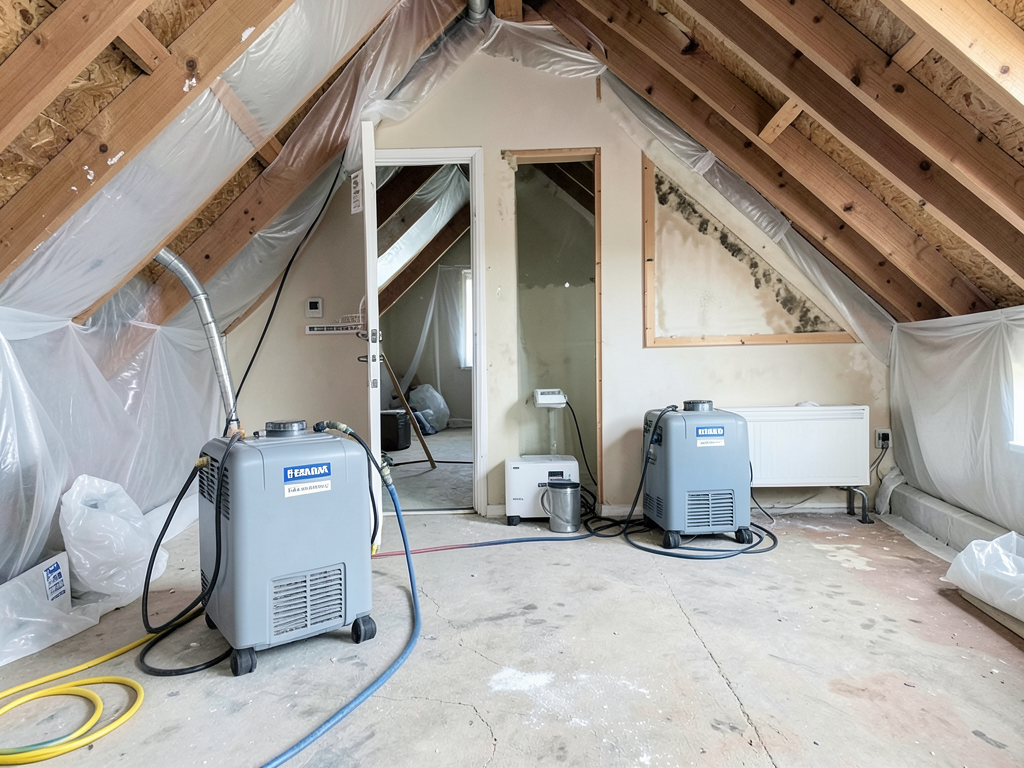
Photo showing professional attic mold remediation process, including containment setup, HEPA filtration units, and treated surfaces ready for restoration.
Preventing Future Attic Moisture Problems in Shepherd Park
Prevention represents the most cost-effective approach to attic moisture management for Shepherd Park homeowners. Regular roof inspections catch minor issues before they become major problems. We recommend bi-annual inspections, particularly after severe weather events common to DC’s climate. These inspections identify loose shingles, damaged flashing, and other vulnerabilities that allow water intrusion.
Gutter maintenance prevents ice dam formation and water backup. Shepherd Park’s mature trees drop leaves and debris that clog gutters and downspouts. We recommend cleaning gutters at least twice yearly and installing gutter guards to reduce maintenance frequency. Properly functioning gutters direct water away from your home’s foundation and roof edges.
Attic ventilation monitoring ensures your ventilation system continues working effectively. We check that soffit vents remain unblocked by insulation and that ridge vents or gable vents provide adequate exhaust capacity. Even small changes in your home’s interior, like adding a new bathroom or finishing a basement, can affect attic ventilation needs.
Humidity control inside your home reduces the moisture load on your attic. Using bathroom exhaust fans during and after showers, running kitchen range hoods when cooking, and maintaining indoor humidity between 30-50% helps prevent excess moisture from reaching your attic space. Dehumidifiers in basements can also reduce the stack effect moisture transfer.
Roof material selection impacts long-term moisture management. Shepherd Park’s historic homes may qualify for material exemptions under DC preservation guidelines, but modern roofing materials offer superior moisture protection. We help homeowners balance historical accuracy with modern performance when roof replacement becomes necessary. Roofing Rockville.
Ice and water shield installation provides critical protection in DC’s climate. We recommend installing ice and water shield along eaves, in valleys, and around all roof penetrations. This self-adhering membrane prevents water backup from ice dams and wind-driven rain from penetrating your roof deck.
Professional maintenance agreements provide peace of mind for Shepherd Park homeowners. Our scheduled service programs include regular inspections, preventive treatments, and priority response for emergency situations. This ongoing relationship helps identify and address potential problems before they cause significant damage.
Education empowers homeowners to recognize early warning signs. We provide guidance on what to look for during routine home maintenance and when to call for professional assessment. This knowledge helps Shepherd Park residents protect their investment and maintain their home’s historical character.
Community awareness strengthens prevention efforts throughout Shepherd Park. Sharing information about common moisture problems and solutions helps neighbors protect their homes collectively. Our experience with multiple Shepherd Park properties allows us to identify neighborhood-specific patterns and recommend targeted prevention strategies.
Before and after comparison showing attic ventilation improvements, including new soffit vents, ridge vent installation, and moisture barrier application.
Frequently Asked Questions
How much does attic mold remediation cost in Shepherd Park?
Attic mold remediation costs in Shepherd Park typically range from $2,500 to $7,500 depending on the extent of mold growth, required repairs, and attic size. Simple surface treatments for small areas cost less, while extensive remediation involving insulation replacement and structural repairs costs more. Most Shepherd Park homes require $4,000-$5,000 for comprehensive treatment including roof repairs and ventilation improvements.
Can I remove attic mold myself or do I need a professional?
DIY mold removal is not recommended for Shepherd Park homes due to health risks and the likelihood of incomplete remediation. Professional remediation ensures proper containment to prevent spore spread, uses industrial-grade antimicrobial treatments, and addresses underlying moisture sources. Additionally, DC regulations may require licensed professionals for mold remediation over certain square footages.
How long does attic mold remediation take?
Most Shepherd Park attic mold remediation projects take 2-5 days depending on the scope. Simple treatments might complete in one day, while projects involving roof repairs, ventilation improvements, and insulation replacement require more time. The process includes containment setup, mold removal, treatment application, and post-remediation verification testing.
Will my homeowners insurance cover attic mold damage?
Insurance coverage for attic mold in Shepherd Park varies by policy and cause. Sudden damage from covered events like storms may be covered, but mold resulting from long-term neglect or maintenance issues typically isn’t covered. We help document damage and work with insurance companies to maximize available coverage when applicable.
How can I tell if my attic has a moisture problem before mold appears?
Early moisture indicators include frost on nails or roof sheathing during winter, condensation on windows in attic spaces, musty odors in upstairs rooms, and increased allergy symptoms among family members. You might also notice ice dam formation along roof edges or water stains on ceiling corners. Professional moisture inspections can detect problems before visible signs appear.
What building codes apply to attic ventilation in Shepherd Park?
DC Building Code Section 11-4-1410 requires specific ventilation ratios for attic spaces, typically 1 square foot of net free ventilation area per 150 square feet of attic floor space. Shepherd Park’s historic homes may have different requirements, but modern ventilation standards help prevent moisture problems regardless of age. We ensure all improvements meet current code requirements.
How often should I have my Shepherd Park roof inspected for moisture issues?
We recommend bi-annual roof inspections for Shepherd Park homes, typically in spring and fall. Additional inspections after severe weather events help catch damage early. Regular inspections identify loose shingles, damaged flashing, and ventilation problems before they allow significant moisture intrusion and mold development.
Can attic mold affect the air quality in my living spaces?
Yes, attic mold significantly impacts indoor air quality throughout your Shepherd Park home. Mold spores travel through air ducts, wall cavities, and ceiling penetrations. Even small attic mold problems can trigger respiratory issues, allergies, and other health concerns for your family. The stack effect draws air from your attic into living spaces, distributing mold spores throughout your home.
Take Action to Protect Your Shepherd Park Home
Attic mold and moisture problems won’t resolve themselves. What starts as a small roof leak or ventilation issue can escalate into major structural damage and serious health hazards within months. Shepherd Park’s historic homes deserve specialized care that addresses both their unique architectural features and modern moisture management requirements.
Our team understands the specific challenges Shepherd Park homeowners face, from mature tree canopies creating debris accumulation to historic building methods that didn’t prioritize moisture management. We combine traditional craftsmanship with modern technology to provide solutions that protect your home’s character while preventing future problems.
Don’t wait until you see visible mold or experience ceiling damage. The musty odor you notice in your upstairs bedroom or the slight water stain near your ceiling corner could indicate a developing moisture problem that’s about to escalate. Early intervention saves money and protects your family’s health.
Call (771) 240-3300 today to schedule your comprehensive attic inspection. Our technicians will identify moisture sources, assess any existing mold growth, and provide a detailed plan for remediation and prevention. We offer same-day emergency service for active leaks and can often complete initial assessments within 24 hours of your call.
Pick up the phone and call (771) 240-3300 before the next DC storm hits. Shepherd Park’s weather patterns mean another severe weather event is always around the corner, and that small roof vulnerability could become a major water intrusion problem overnight. Protect your home, your health, and your investment with professional attic moisture management.
Don’t let attic mold compromise your Shepherd Park home’s structural integrity or your family’s well-being. Contact us now at (771) 240-3300 to take the first step toward a dry, healthy attic space that protects your home for decades to come.
- Recognize Early Warning Signs
Look for musty odors, dark staining on attic sheathing, peeling paint near ceiling corners, and increased allergy symptoms among family members. These indicators often appear before visible mold growth.
- Conduct a Visual Inspection
Check your attic for dark patches on wood surfaces, frost accumulation on nails during winter, and condensation on windows or other surfaces. Use a flashlight to examine roof deck areas thoroughly.
- Perform the Screwdriver Test
Press a screwdriver into attic wood surfaces near suspected moisture areas. If the wood feels soft or the screwdriver penetrates easily, rot has begun and structural integrity is compromised.
- Check Ventilation Systems
Ensure soffit vents aren’t blocked by insulation, verify ridge or gable vents provide adequate exhaust, and confirm bathroom exhaust fans vent outside rather than into the attic space.
- Schedule Professional Assessment
Call (771) 240-3300 to arrange a comprehensive inspection using moisture meters, thermal imaging, and professional diagnostic tools to identify all moisture sources and mold growth areas.
{
“@context”: “https://schema.org”,
“@type”: “BlogPosting”,
“headline”: “Identifying the Early Signs of Attic Mold and Moisture in Shepherd Park Houses”,
“description”: “Learn to spot attic mold and moisture issues in Shepherd Park homes. Our DC roofing experts explain the warning signs, causes, and solutions for your historic property.”,
“wordCount”: 3598,
“datePublished”: “2026-04-06T09:30:00.000Z”,
“dateModified”: “2026-04-06T09:30:00.000Z”,
“inLanguage”: “en-US”,
“mainEntityOfPage”: {
“@type”: “WebPage”,
“@id”: “https://aceroofingwashingtondc.com”
},
“publisher”: {
“@type”: “LocalBusiness”,
“name”: “Ace Roofing Washington DC”,
“url”: “https://aceroofingwashingtondc.com”
},
“author”: {
“@type”: “Organization”,
“name”: “Ace Roofing Washington DC”,
“url”: “https://aceroofingwashingtondc.com”
},
“image”: {
“@type”: “ImageObject”,
“url”: “https://aceroofingwashingtondc.com/wp-content/uploads/2026/03/identifying-the-early-signs-of-attic-mold-and-mois-1.png”
}
}
{
“@context”: “https://schema.org”,
“@type”: “RoofingContractor”,
“name”: “Ace Roofing Washington DC”,
“url”: “https://aceroofingwashingtondc.com”,
“address”: {
“@type”: “PostalAddress”,
“addressLocality”: “Washington DC”
},
“areaServed”: {
“@type”: “City”,
“name”: “Washington DC”
}
}
{
“@context”: “https://schema.org”,
“@type”: “FAQPage”,
“mainEntity”: [
{
“@type”: “Question”,
“name”: “How much does attic mold remediation cost in Shepherd Park?”,
“acceptedAnswer”: {
“@type”: “Answer”,
“text”: “Attic mold remediation costs in Shepherd Park typically range from $2,500 to $7,500 depending on the extent of mold growth, required repairs, and attic size. Simple surface treatments for small areas cost less, while extensive remediation involving insulation replacement and structural repairs costs more. Most Shepherd Park homes require $4,000-$5,000 for comprehensive treatment including roof repairs and ventilation improvements.”
}
},
{
“@type”: “Question”,
“name”: “Can I remove attic mold myself or do I need a professional?”,
“acceptedAnswer”: {
“@type”: “Answer”,
“text”: “DIY mold removal is not recommended for Shepherd Park homes due to health risks and the likelihood of incomplete remediation. Professional remediation ensures proper containment to prevent spore spread, uses industrial-grade antimicrobial treatments, and addresses underlying moisture sources. Additionally, DC regulations may require licensed professionals for mold remediation over certain square footages.”
}
},
{
“@type”: “Question”,
“name”: “How long does attic mold remediation take?”,
“acceptedAnswer”: {
“@type”: “Answer”,
“text”: “Most Shepherd Park attic mold remediation projects take 2-5 days depending on the scope. Simple treatments might complete in one day, while projects involving roof repairs, ventilation improvements, and insulation replacement require more time. The process includes containment setup, mold removal, treatment application, and post-remediation verification testing.”
}
},
{
“@type”: “Question”,
“name”: “Will my homeowners insurance cover attic mold damage?”,
“acceptedAnswer”: {
“@type”: “Answer”,
“text”: “Insurance coverage for attic mold in Shepherd Park varies by policy and cause. Sudden damage from covered events like storms may be covered, but mold resulting from long-term neglect or maintenance issues typically isn’t covered. We help document damage and work with insurance companies to maximize available coverage when applicable.”
}
},
{
“@type”: “Question”,
“name”: “How can I tell if my attic has a moisture problem before mold appears?”,
“acceptedAnswer”: {
“@type”: “Answer”,
“text”: “Early moisture indicators include frost on nails or roof sheathing during winter, condensation on windows in attic spaces, musty odors in upstairs rooms, and increased allergy symptoms among family members. You might also notice ice dam formation along roof edges or water stains on ceiling corners. Professional moisture inspections can detect problems before visible signs appear.”
}
},
{
“@type”: “Question”,
“name”: “What building codes apply to attic ventilation in Shepherd Park?”,
“acceptedAnswer”: {
“@type”: “Answer”,
“text”: “DC Building Code Section 11-4-1410 requires specific ventilation ratios for attic spaces, typically 1 square foot of net free ventilation area per 150 square feet of attic floor space. Shepherd Park’s historic homes may have different requirements, but modern ventilation standards help prevent moisture problems regardless of age. We ensure all improvements meet current code requirements.”
}
},
{
“@type”: “Question”,
“name”: “How often should I have my Shepherd Park roof inspected for moisture issues?”,
“acceptedAnswer”: {
“@type”: “Answer”,
“text”: “We recommend bi-annual roof inspections for Shepherd Park homes, typically in spring and fall. Additional inspections after severe weather events help catch damage early. Regular inspections identify loose shingles, damaged flashing, and ventilation problems before they allow significant moisture intrusion and mold development.”
}
},
{
“@type”: “Question”,
“name”: “Can attic mold affect the air quality in my living spaces?”,
“acceptedAnswer”: {
“@type”: “Answer”,
“text”: “Yes, attic mold significantly impacts indoor air quality throughout your Shepherd Park home. Mold spores travel through air ducts, wall cavities, and ceiling penetrations. Even small attic mold problems can trigger respiratory issues, allergies, and other health concerns for your family. The stack effect draws air from your attic into living spaces, distributing mold spores throughout your home.”
}
}
]
}
{
“@context”: “https://schema.org”,
“@type”: “HowTo”,
“name”: “How to Identify Attic Mold and Moisture Problems”,
“step”: [
{
“@type”: “HowToStep”,
“position”: 1,
“name”: “Recognize Early Warning Signs”,
“text”: “Look for musty odors, dark staining on attic sheathing, peeling paint near ceiling corners, and increased allergy symptoms among family members. These indicators often appear before visible mold growth.”
},
{
“@type”: “HowToStep”,
“position”: 2,
“name”: “Conduct a Visual Inspection”,
“text”: “Check your attic for dark patches on wood surfaces, frost accumulation on nails during winter, and condensation on windows or other surfaces. Use a flashlight to examine roof deck areas thoroughly.”
},
{
“@type”: “HowToStep”,
“position”: 3,
“name”: “Perform the Screwdriver Test”,
“text”: “Press a screwdriver into attic wood surfaces near suspected moisture areas. If the wood feels soft or the screwdriver penetrates easily, rot has begun and structural integrity is compromised.”
},
{
“@type”: “HowToStep”,
“position”: 4,
“name”: “Check Ventilation Systems”,
“text”: “Ensure soffit vents aren’t blocked by insulation, verify ridge or gable vents provide adequate exhaust, and confirm bathroom exhaust fans vent outside rather than into the attic space.”
},
{
“@type”: “HowToStep”,
“position”: 5,
“name”: “Schedule Professional Assessment”,
“text”: “Call (771) 240-3300 to arrange a comprehensive inspection using moisture meters, thermal imaging, and professional diagnostic tools to identify all moisture sources and mold growth areas.”
}
],
“image”: “https://aceroofingwashingtondc.com/wp-content/uploads/2026/03/identifying-the-early-signs-of-attic-mold-and-mois-1.png”
}
{
“@context”: “https://schema.org”,
“@type”: “BreadcrumbList”,
“itemListElement”: [
{
“@type”: “ListItem”,
“position”: 1,
“name”: “Home”,
“item”: “https://aceroofingwashingtondc.com”
},
{
“@type”: “ListItem”,
“position”: 2,
“name”: “Blog”,
“item”: “https://aceroofingwashingtondc.com/blog”
},
{
“@type”: “ListItem”,
“position”: 3,
“name”: “Identifying the Early Signs of Attic Mold and Moisture in Shepherd Park Houses”
}
]
}
{
“@context”: “https://schema.org”,
“@type”: “Service”,
“serviceType”: “Roofing”,
“provider”: {
“@type”: “LocalBusiness”,
“name”: “Ace Roofing Washington DC”,
“url”: “https://aceroofingwashingtondc.com”
},
“areaServed”: {
“@type”: “City”,
“name”: “Washington DC”
},
“description”: “Learn to spot attic mold and moisture issues in Shepherd Park homes. Our DC roofing experts explain the warning signs, causes, and solutions for your historic property.”
}