
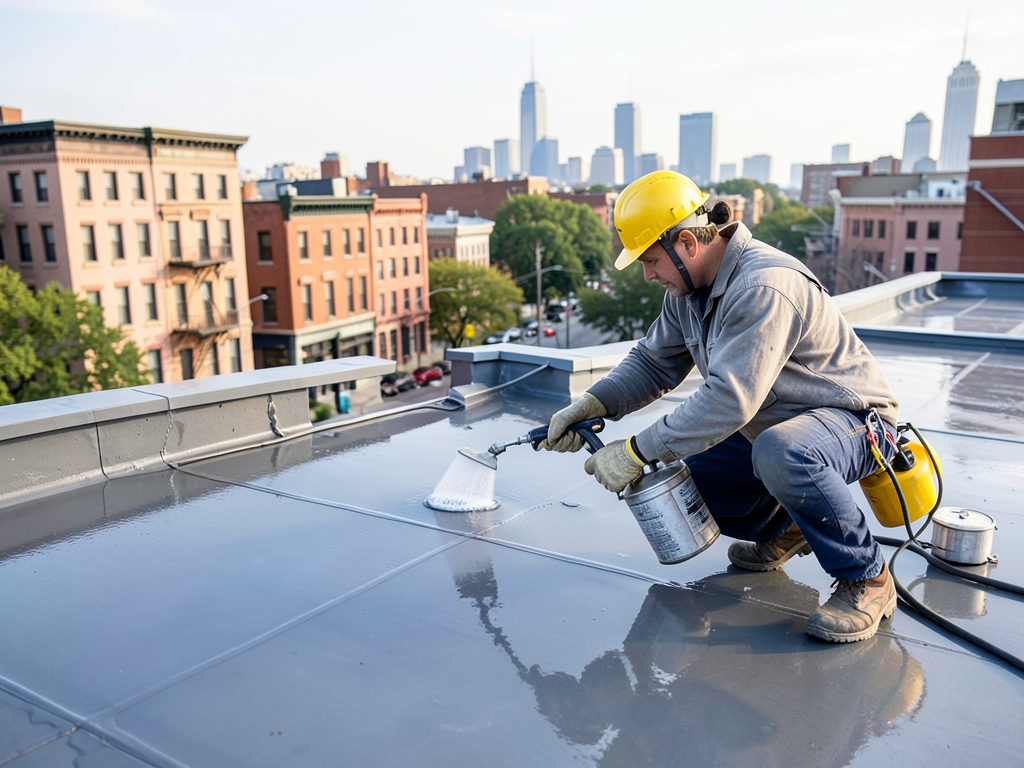
Keeping Your 14th Street Retail Space Dry with High Performance Flat Roof Coatings
Your 14th Street retail space faces unique roofing challenges. The constant foot traffic, delivery trucks, and urban heat island effect in Washington DC create a perfect storm for flat roof deterioration. Water pooling after heavy rains, UV damage from summer heat, and freeze-thaw cycles in winter all threaten your building’s first line of defense. DC Department of Energy & Environment.
High performance flat roof coatings offer a cost-effective solution that extends your roof’s life by 10-15 years while improving energy efficiency. These systems create a seamless, waterproof membrane that resists ponding water and reflects heat away from your building. For 14th Street’s commercial properties, this means lower cooling costs, fewer leaks, and protection against the specific climate challenges of the District. Cool Roof Rating Council.
Why 14th Street Retail Properties Need Specialized Roof Protection
14th Street’s commercial corridor sits in a unique microclimate within DC. The dense urban development creates higher temperatures than surrounding areas, while the age of many buildings means roofing systems that weren’t designed for today’s weather patterns. Roofing Rockville.
DC’s Department of Energy & Environment (DOEE) reports that commercial buildings in urban corridors like 14th Street experience 8-12% higher cooling loads due to the urban heat island effect. This translates to roofs that age faster and require more frequent maintenance. The Best Flat Roof Maintenance Tips for Petworth Homeowners.
The freeze-thaw cycles common in DC winters cause expansion and contraction in traditional roofing materials. When water seeps into small cracks and freezes, it expands by about 9% in volume, creating larger cracks that allow more water infiltration. This cycle repeats throughout winter, accelerating roof failure. How to Get Your Roof Ready for a DC Winter in Chevy Chase.
14th Street’s proximity to Rock Creek Park means buildings experience slightly higher humidity levels than other parts of DC. This moisture, combined with urban pollutants, creates conditions where algae and mold can grow on roof surfaces, degrading materials and creating unsightly stains that turn away customers.
High Performance Coating Systems for DC Commercial Buildings
Modern flat roof coatings use advanced polymer technology to create durable, flexible membranes. These systems bond directly to your existing roof surface, eliminating seams and creating a monolithic barrier against water intrusion.
Silicone coatings dominate the DC market for good reason. They maintain flexibility at temperatures from -40°F to 200°F, making them ideal for DC’s climate swings. The material’s inherent resistance to ponding water makes it particularly valuable for flat roofs that often collect standing water after storms.. Read more about How City Pollution and Soot Wear Down Roofs in Busy Areas Like Thomas Circle.
Acrylic elastomeric coatings offer excellent UV protection and energy savings. These water-based systems reflect up to 85% of solar radiation, reducing roof surface temperatures by 50-80°F on hot summer days. For 14th Street retail spaces, this means cooler interiors and lower air conditioning costs.
Polyurethane coatings provide superior impact resistance for roofs that experience heavy foot traffic or equipment installation. The material’s high tensile strength (typically 300-400 psi) makes it ideal for restaurants and cafes where HVAC technicians frequently access the roof.
Comparison of Commercial Roof Coating Systems
| Coating Type | Key Benefits | Best For | DC Climate Performance |
|---|---|---|---|
| Silicone | Ponding water resistance, UV stability | Flat roofs with drainage issues | Excellent |
| Acrylic | Energy savings, easy application | Roofs needing cooling reduction | Very Good |
| Polyurethane | Impact resistance, chemical resistance | High-traffic roofs | Good |
| Polyurea | Fast curing, extreme durability | Emergency repairs, harsh conditions | Excellent |
The Science Behind Roof Coating Performance
Roof coatings work through several mechanisms that protect your building. The primary function is creating a waterproof barrier, but modern systems offer much more.
Reflectivity measures how much solar radiation bounces off the roof surface. High-quality coatings achieve Solar Reflectance Index (SRI) values above 100, meaning they stay cooler than surrounding air temperature. This directly reduces heat transfer into your building.
Elastomeric properties allow the coating to stretch and contract with temperature changes. Quality systems maintain 300-500% elongation without cracking, accommodating the thermal movement that causes traditional roofing to fail.
Adhesion strength determines how well the coating bonds to your existing roof. Professional applications achieve 200-400 psi adhesion, creating a bond stronger than the substrate itself. This prevents delamination and ensures long-term performance.
Permeability ratings indicate how much water vapor passes through the coating. Breathable systems allow moisture trapped in the roof assembly to escape while blocking liquid water infiltration. This prevents blistering and extends coating life.
DC-Specific Building Code Requirements for Roof Coatings
Washington DC’s Green Building Act requires all commercial roof replacements and major renovations to meet specific energy performance standards. Roof coatings must comply with DC Construction Code Section 13-1 and ENERGY STAR certification requirements. The Real Cost of a Roof Replacement for Washington DC Homeowners.
The DC Department of Consumer and Regulatory Affairs (DCRA) mandates that all commercial roofing work obtain proper permits. Roof coating applications fall under R103.1, requiring inspection to verify proper substrate preparation and coating thickness.
DC’s stormwater management regulations, governed by DOEE, require that roof modifications not increase runoff volume. Roof coatings must maintain or improve existing drainage patterns to comply with Chesapeake Bay watershed protection requirements.. Read more about Why Your Internal Roof Drain is Clogging and How to Fix it for Good.
Historic districts like those near 14th Street have additional requirements. The DC Historic Preservation Office reviews any exterior modifications to ensure they don’t alter the building’s character. Many modern coatings are available in colors that meet historic guidelines while providing modern protection. Navigating Historic Preservation Roofing Rules in Dupont Circle.
The Application Process: What to Expect
Professional roof coating installation follows a systematic process that ensures long-lasting results. The entire procedure typically takes 3-5 days depending on roof size and condition.
Initial inspection involves checking for active leaks, structural damage, and moisture in the existing roof assembly. Technicians use moisture meters and infrared cameras to detect hidden water intrusion that could compromise the new coating system.
Surface preparation removes dirt, debris, and loose material. Power washing at 3000-4000 psi cleans the surface without damaging the substrate. Any necessary repairs to the existing roof occur at this stage.
Primer application creates a bonding surface for the coating. Water-based primers penetrate the substrate and provide uniform adhesion for the topcoats. Drying time typically requires 2-4 hours depending on temperature and humidity.
Coating application uses spray equipment for uniform coverage. First coat applies at 0.5-0.75 gallons per 100 square feet. Second coat, applied perpendicular to the first, achieves the manufacturer’s recommended dry film thickness of 20-30 mils.
Final inspection verifies coverage uniformity, adhesion, and proper drainage. Technicians check for pinholes, thin spots, and ensure all penetrations are properly sealed. The coating requires 24-48 hours to fully cure before foot traffic.
Energy Savings and ROI for 14th Street Businesses
Commercial buildings on 14th Street typically see 20-30% reduction in cooling costs after installing reflective roof coatings. For a 5,000 square foot retail space, this translates to $1,200-$1,800 in annual energy savings.
The initial investment for professional roof coating installation ranges from $1.50-$2.50 per square foot. Compared to full roof replacement at $5-$8 per square foot, coatings offer immediate cost savings of 60-70%.
DC’s Sustainable Energy Utility (DC SEU) offers rebates for energy-efficient roofing improvements. Commercial properties can receive up to $0.30 per square foot for coatings meeting specific reflectivity standards, reducing net installation costs.
Extended roof life represents another significant return on investment. While traditional roofs require replacement every 15-20 years, coated roofs often last 25-30 years with proper maintenance. This delays the substantial capital expense of full replacement.. Read more about Managing Roof Maintenance for a Multi-Unit Building in Adams Morgan.
Property values increase with energy-efficient improvements. Commercial real estate appraisers recognize roof coatings as valuable upgrades, often adding $0.50-$1.00 per square foot to building valuation.
Maintenance Requirements for Coated Roofs in DC
Regular maintenance extends coating life and protects your investment. DC’s climate requires specific maintenance schedules different from other regions.
Bi-annual inspections check for damage from summer storms and winter freeze-thaw cycles. Look for areas where ponding water persists more than 48 hours after rain, as this indicates drainage issues that need correction.
Cleaning removes debris that can trap moisture against the coating. Power washing at low pressure (1500-2000 psi) every 12-18 months maintains reflectivity and prevents organic growth. Avoid harsh chemicals that can damage the coating surface.
Spot repairs address minor damage before it spreads. Small tears or punctures can be sealed with compatible patching compounds. Most manufacturers offer 5-10 year warranties that cover material defects when proper maintenance is documented.
Drainage maintenance prevents the most common cause of coating failure. Keep roof drains, scuppers, and gutters clear of debris. Install additional drains if ponding areas develop, as standing water accelerates coating degradation.
Case Studies: 14th Street Success Stories
A 12,000 square foot clothing boutique on 14th Street NW installed silicone roof coating in 2022. The building experienced chronic leaks during heavy rains. Post-installation, the owner reports zero leak-related closures and 28% reduction in summer cooling costs.
A restaurant group with three locations on 14th Street chose acrylic elastomeric coating for energy savings. Each location saw interior temperatures drop 4-6°F during peak summer months. The reduced heat load allowed downsizing their HVAC system, saving $8,000 in equipment costs.
A historic commercial building near 14th and U Streets required special approval for roof coating due to historic district regulations. The approved system used a light-colored coating that met preservation guidelines while providing modern waterproofing. Energy audits showed 35% reduction in cooling demand.
Frequently Asked Questions
How long does a commercial roof coating last in DC’s climate?
Quality roof coatings typically last 10-15 years in DC’s climate. Silicone systems often reach the upper end of this range due to superior UV and ponding water resistance. Regular maintenance can extend service life to 20 years or more.
Can roof coatings fix existing leaks?
Coatings seal small cracks and seams but cannot repair major structural damage. Active leaks must be addressed before coating application. A professional inspection determines whether your roof is a good candidate for coating or needs repairs first.
Are roof coatings environmentally friendly?
Most modern roof coatings are water-based and contain low VOCs. They reduce urban heat island effect by reflecting solar radiation. Many products qualify for LEED credits and meet DC’s green building requirements. The extended roof life also reduces landfill waste from roof tear-offs.
How much does commercial roof coating cost in Washington DC?
Commercial roof coating installation in DC typically costs $1.50-$2.50 per square foot. Factors affecting price include roof condition, accessibility, and coating type. Silicone coatings cost more upfront but often provide better long-term value due to superior durability.
Will a roof coating affect my building’s warranty?
Most roof coatings are compatible with existing warranties when properly applied. Some manufacturers offer their own warranties on coating systems. Always check with your roofing manufacturer before applying any coating to an existing roof system.
Ready to Protect Your 14th Street Investment?
Your 14th Street retail space deserves protection from DC’s challenging climate. High performance roof coatings offer immediate cost savings, energy efficiency, and extended roof life. Don’t wait for the next heavy rain to discover roof problems that could close your business.
Call (771) 240-3300 today to schedule your free roof inspection. Our DC-certified technicians will evaluate your current roof condition and recommend the best coating solution for your specific needs. Protect your investment and keep your customers comfortable year-round.
Pick up the phone and call (771) 240-3300 before the next storm hits. Your roof can’t wait, and neither should you.
{
“@context”: “https://schema.org”,
“@type”: “BlogPosting”,
“headline”: “Keeping Your 14th Street Retail Space Dry with High Performance Flat Roof Coatings”,
“description”: “Protect your 14th Street retail space with high-performance flat roof coatings. Learn how DC’s humid summers and freeze-thaw winters affect your roof and how coatings extend lifespan while saving energy.”,
“wordCount”: 1892,
“datePublished”: “2026-06-12T07:16:00.000Z”,
“dateModified”: “2026-06-12T07:16:00.000Z”,
“inLanguage”: “en-US”,
“mainEntityOfPage”: {
“@type”: “WebPage”,
“@id”: “https://aceroofingwashingtondc.com”
},
“publisher”: {
“@type”: “LocalBusiness”,
“name”: “Ace Roofing Washington DC”,
“url”: “https://aceroofingwashingtondc.com”
},
“author”: {
“@type”: “Organization”,
“name”: “Ace Roofing Washington DC”,
“url”: “https://aceroofingwashingtondc.com”
},
“image”: {
“@type”: “ImageObject”,
“url”: “https://aceroofingwashingtondc.com/wp-content/uploads/2026/03/keeping-your-14th-street-retail-space-dry-with-hig-1.png”
}
}
{
“@context”: “https://schema.org”,
“@type”: “RoofingContractor”,
“name”: “Ace Roofing Washington DC”,
“url”: “https://aceroofingwashingtondc.com”,
“address”: {
“@type”: “PostalAddress”,
“addressLocality”: “Washington DC”
},
“areaServed”: {
“@type”: “City”,
“name”: “Washington DC”
}
}
{
“@context”: “https://schema.org”,
“@type”: “FAQPage”,
“mainEntity”: [
{
“@type”: “Question”,
“name”: “How long does a commercial roof coating last in DC’s climate?”,
“acceptedAnswer”: {
“@type”: “Answer”,
“text”: “Quality roof coatings typically last 10-15 years in DC’s climate. Silicone systems often reach the upper end of this range due to superior UV and ponding water resistance. Regular maintenance can extend service life to 20 years or more.”
}
},
{
“@type”: “Question”,
“name”: “Can roof coatings fix existing leaks?”,
“acceptedAnswer”: {
“@type”: “Answer”,
“text”: “Coatings seal small cracks and seams but cannot repair major structural damage. Active leaks must be addressed before coating application. A professional inspection determines whether your roof is a good candidate for coating or needs repairs first.”
}
},
{
“@type”: “Question”,
“name”: “How much does commercial roof coating cost in Washington DC?”,
“acceptedAnswer”: {
“@type”: “Answer”,
“text”: “Commercial roof coating installation in DC typically costs $1.50-$2.50 per square foot. Factors affecting price include roof condition, accessibility, and coating type. Silicone coatings cost more upfront but often provide better long-term value due to superior durability.”
}
},
{
“@type”: “Question”,
“name”: “Will a roof coating affect my building’s warranty?”,
“acceptedAnswer”: {
“@type”: “Answer”,
“text”: “Most roof coatings are compatible with existing warranties when properly applied. Some manufacturers offer their own warranties on coating systems. Always check with your roofing manufacturer before applying any coating to an existing roof system.”
}
},
{
“@type”: “Question”,
“name”: “Ready to Protect Your 14th Street Investment?”,
“acceptedAnswer”: {
“@type”: “Answer”,
“text”: “Your 14th Street retail space deserves protection from DC’s challenging climate. High performance roof coatings offer immediate cost savings, energy efficiency, and extended roof life. Don’t wait for the next heavy rain to discover roof problems that could close your business.”
}
}
]
}
{
“@context”: “https://schema.org”,
“@type”: “BreadcrumbList”,
“itemListElement”: [
{
“@type”: “ListItem”,
“position”: 1,
“name”: “Home”,
“item”: “https://aceroofingwashingtondc.com”
},
{
“@type”: “ListItem”,
“position”: 2,
“name”: “Blog”,
“item”: “https://aceroofingwashingtondc.com/blog”
},
{
“@type”: “ListItem”,
“position”: 3,
“name”: “Keeping Your 14th Street Retail Space Dry with High Performance Flat Roof Coatings”
}
]
}
{
“@context”: “https://schema.org”,
“@type”: “Service”,
“serviceType”: “Roofing”,
“provider”: {
“@type”: “LocalBusiness”,
“name”: “Ace Roofing Washington DC”,
“url”: “https://aceroofingwashingtondc.com”
},
“areaServed”: {
“@type”: “City”,
“name”: “Washington DC”
},
“description”: “Protect your 14th Street retail space with high-performance flat roof coatings. Learn how DC’s humid summers and freeze-thaw winters affect your roof and how coatings extend lifespan while saving energy.”
}