
Your Guide to Flat Roof Drainage Solutions for Rowhouses in Brookland
Flat roofs on Brookland rowhouses face unique drainage challenges that can lead to costly water damage if not addressed properly. The combination of Washington DC’s heavy rainfall patterns, aging infrastructure, and the specific architectural characteristics of Brookland’s historic row homes creates a perfect storm for drainage failures. DC Department of Buildings.
Within the first 100 words: Flat roof drainage problems in Brookland rowhouses stem from ponding water, clogged scuppers, and inadequate pitch. These issues can cause structural damage, interior leaks, and mold growth. Understanding the specific challenges of Brookland’s flat roof systems is essential for preventing expensive repairs and maintaining your home’s value. Why Your Capitol Hill Rowhouse Needs a Specialized Flat Roof System.
Common Causes of Flat Roof Drainage Failure in Brookland Rowhouses
Brookland’s flat roof drainage systems fail for several specific reasons that differ from other DC neighborhoods. The area’s combination of mature trees, historic construction methods, and urban density creates unique challenges. DC Historic Preservation Office.
Tree debris accumulation represents one of the biggest culprits. Brookland’s mature oak and maple trees drop leaves, twigs, and seeds that clog scuppers and internal drains. During heavy rains, this debris creates dams that prevent water from flowing off the roof, leading to ponding that can exceed 2 inches in depth.
Structural settling is another major issue. Many Brookland rowhouses were built between 1900 and 1940, and their foundations have shifted over the past century. This settling causes the roof deck to develop low spots where water naturally collects. The weight of ponding water then accelerates the settling process, creating a destructive cycle.
Outdated drainage hardware fails frequently in Brookland’s climate. Many original scuppers and internal drains were designed for lighter rainfall patterns from decades ago. Today’s more intense storms overwhelm these systems, causing backups and overflows that damage both the roof and interior spaces.
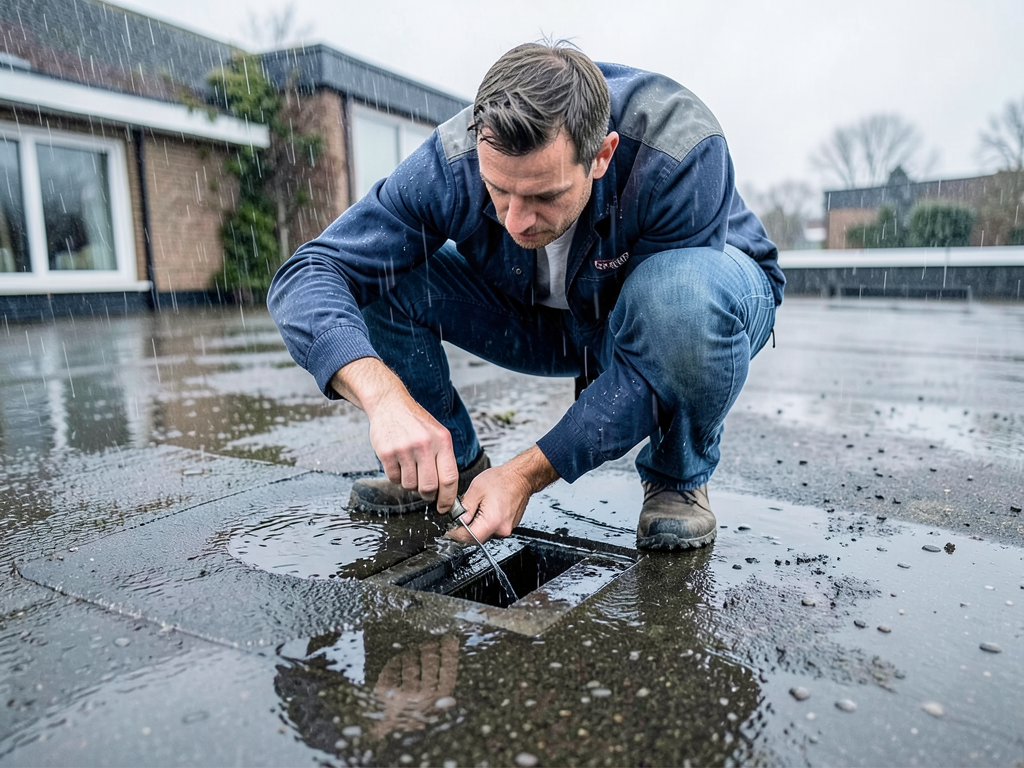
Close-up photo showing clogged scupper with leaf debris and standing water on a Brookland rowhouse flat roof
DC Building Codes and Drainage Requirements for Brookland
The District of Columbia enforces strict building codes for flat roof drainage that directly impact Brookland homeowners. Understanding these requirements is crucial for both repairs and new installations.
According to the 2020 DC Construction Codes, flat roofs must have secondary overflow drainage systems to prevent structural damage from ponding water. This requirement specifically addresses the risk of primary drains becoming blocked during severe weather events.
The code mandates that overflow scuppers must be installed at least 2 inches above the main roof surface and sized to handle 50% of the roof’s maximum drainage capacity. This ensures that if primary drains fail, water can still exit the roof before reaching dangerous depths.
Brookland’s historic district status adds another layer of complexity. Any modifications to drainage systems on properties within the Brookland Historic District must be reviewed by the Historic Preservation Office. This review process ensures that new drainage solutions maintain the architectural integrity of these early 20th-century homes. Navigating Historic Preservation Roofing Rules in Dupont Circle.
The DC Department of Buildings requires that all flat roof drainage repairs be performed by licensed contractors who understand the specific challenges of urban row house construction. This licensing requirement helps ensure that repairs meet both safety standards and local building codes.
Diagnostic Process for Flat Roof Drainage Issues
Identifying the root cause of drainage problems requires a systematic diagnostic approach. Professional roofers use several techniques to pinpoint exactly where and why water isn’t draining properly.
The water test represents the first step in diagnosis. Technicians flood specific sections of the roof and observe how water moves across the surface. This test reveals low spots, blocked drains, and areas where the roof pitch is insufficient for proper drainage.
Moisture meter readings help determine if water has penetrated the roofing membrane. These readings show whether ponding water has caused leaks that could lead to interior damage. The moisture content is measured at multiple depths to assess the extent of any water infiltration.
Drainage flow testing involves running water through scuppers and internal drains to check for blockages. This test can reveal debris buildup, pipe damage, or improper connections that prevent water from flowing freely off the roof.
Structural assessment examines the roof deck for signs of sagging or settling that create drainage problems. This assessment often reveals areas where the roof structure has deteriorated and needs reinforcement before drainage improvements can be effective.
Effective Drainage Solutions for Brookland Rowhouses
Several proven solutions address the specific drainage challenges faced by Brookland rowhouse owners. The right solution depends on the underlying cause of the drainage problem and the roof’s current condition.
Scupper replacement and enlargement often provides the most immediate improvement. Many Brookland homes have original scuppers that are too small for today’s rainfall patterns. Upgrading to larger scuppers with debris guards can significantly improve water flow off the roof. The Real Cost of a Roof Replacement for Washington DC Homeowners.
Tapered insulation installation creates proper roof pitch where settling has caused low spots. This solution involves adding insulation that slopes from 0.25 inches per foot at the roof’s high point to 0 inches at the low points. This creates positive drainage without major structural modifications.
Internal drain cleaning and repair addresses blockages in the roof’s plumbing system. This process involves removing debris, repairing damaged pipes, and ensuring all connections are watertight. In some cases, internal drains need complete replacement if they’re too damaged or corroded.
Crickets and saddles divert water around roof penetrations like chimneys and HVAC units. These small diversion structures prevent water from pooling around obstacles and ensure it flows toward drainage points.
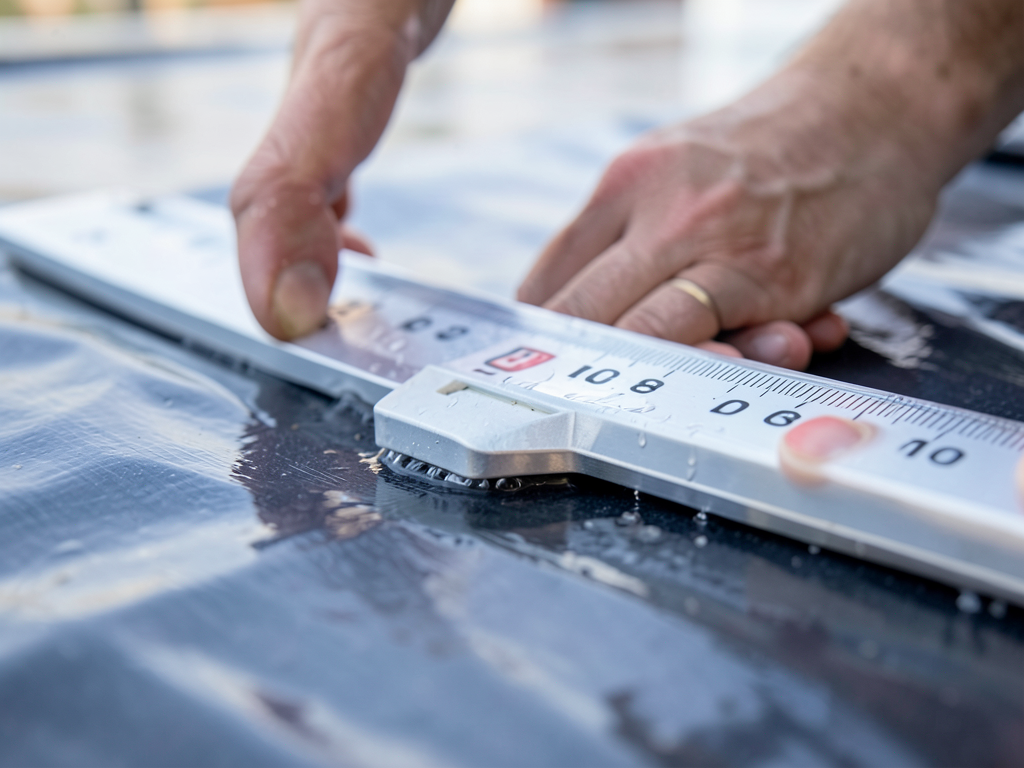
Technician using moisture meter on flat roof to detect water infiltration beneath the surface membrane
Maintenance Strategies to Prevent Future Drainage Problems
Regular maintenance prevents most drainage issues before they become serious problems. Brookland homeowners should implement a consistent maintenance schedule to protect their flat roof investments. The Best Flat Roof Maintenance Tips for Petworth Homeowners.
Seasonal cleaning removes debris that accumulates throughout the year. Spring cleaning clears winter debris, while fall cleaning removes leaves before they can cause winter drainage problems. This twice-yearly maintenance prevents the buildup that leads to clogged drains and scuppers. How to Get Your Roof Ready for a DC Winter in Chevy Chase.
Annual inspections identify potential problems before they cause damage. Professional inspections check for signs of membrane deterioration, flashing damage, and drainage system failures. Early detection allows for minor repairs rather than major renovations.
Gutter and downspout maintenance ensures that water leaving the roof reaches the ground properly. Clogged gutters cause water to back up onto the roof, creating the very drainage problems homeowners are trying to solve.
Roof coating applications protect the membrane from UV damage and extend its lifespan. These coatings also help water flow more easily across the roof surface, reducing the likelihood of ponding in vulnerable areas.
Cost Factors for Flat Roof Drainage Repairs in Brookland
The cost of drainage repairs varies significantly based on the specific problems and solutions required. Understanding these cost factors helps Brookland homeowners budget appropriately for necessary repairs.
Scupper replacement typically costs between $500 and $1,500 per unit, depending on size and accessibility. Larger scuppers with debris guards cost more but provide better long-term performance in Brookland’s tree-lined environment.
Tapered insulation installation ranges from $3 to $6 per square foot, including materials and labor. This solution often proves more cost-effective than structural modifications while providing immediate drainage improvements.
Internal drain repair costs vary widely based on the extent of the problem. Simple cleaning might cost $200 to $400, while complete drain replacement can exceed $2,000 when accounting for demolition and reconstruction of surrounding roofing materials.
Emergency repairs during active leaks typically cost 30-50% more than scheduled maintenance due to the urgency and potential need for temporary solutions. Planning repairs during dry seasons helps control costs.
Choosing the Right Contractor for Brookland Drainage Work
Not all roofing contractors have the expertise needed for Brookland’s specific drainage challenges. Selecting the right professional makes the difference between a lasting solution and recurring problems.
Look for contractors with specific experience in DC row house construction. These professionals understand the unique structural characteristics of Brookland’s historic homes and can recommend solutions that preserve architectural integrity while solving drainage issues.
Verify that contractors are familiar with DC building codes and historic preservation requirements. This knowledge prevents costly mistakes and ensures that all work meets local regulatory standards.
Request references from other Brookland homeowners who have had similar work completed. Local references provide insight into a contractor’s reliability, workmanship quality, and ability to solve complex drainage problems.
Ensure contractors carry proper insurance for work in urban environments. This insurance protects both the homeowner and the contractor during the repair process, especially important in Brookland’s dense residential setting.
Emergency Response to Drainage Failures
When drainage systems fail during storms, quick action prevents extensive water damage. Understanding emergency response procedures helps Brookland homeowners protect their properties.
Immediate water removal prevents structural damage. Using a wet vacuum or submersible pump to remove standing water reduces the weight load on the roof and minimizes the risk of interior leaks.
Temporary patching materials can seal minor membrane damage until permanent repairs can be made. These materials provide a waterproof barrier that prevents water from entering the building during active leaks.
Documenting damage with photos helps with insurance claims and contractor assessments. Clear documentation of the problem’s extent supports both repair decisions and potential insurance coverage.
Contacting a professional immediately prevents the situation from worsening. Even temporary solutions require proper installation to avoid creating additional problems or safety hazards.
Frequently Asked Questions
How often should I inspect my Brookland rowhouse flat roof for drainage issues?
Professional inspections should occur annually, with additional visual checks performed seasonally. Spring and fall inspections are particularly important as they catch problems before heavy rain or snow seasons.
Can I install drainage improvements myself on my historic Brookland home?
DIY drainage work on historic properties often violates DC building codes and historic preservation guidelines. Professional installation ensures compliance and prevents damage to the home’s architectural features.
What are the signs that my flat roof drainage system needs immediate attention?
Standing water that persists more than 48 hours after rain, visible sagging in the roof deck, interior water stains, and unusual odors from the attic all indicate urgent drainage problems requiring professional assessment.
How long do typical flat roof drainage repairs last in Brookland’s climate?
Quality drainage repairs typically last 10-15 years with proper maintenance. However, Brookland’s combination of mature trees and heavy rainfall may require more frequent cleaning and minor adjustments to maintain optimal performance.
Will improving my drainage system increase my home’s value?
Yes, proper drainage systems protect the home’s structure and prevent costly water damage, making the property more attractive to buyers and potentially increasing its market value by preventing future repair needs.
Call (771) 240-3300 Today for Your Brookland Flat Roof Drainage Assessment
Don’t wait for the next heavy rain to discover your drainage system has failed. The combination of Brookland’s historic architecture and Washington DC’s intense rainfall patterns creates a perfect environment for flat roof drainage problems. What starts as a minor ponding issue can quickly escalate into major structural damage, interior leaks, and expensive repairs.
Our team understands the specific challenges Brookland rowhouses face. We know how to work within historic preservation guidelines while implementing modern drainage solutions that actually work. We’ve helped countless Brookland homeowners protect their investments from water damage through proper drainage system design and maintenance.
Pick up the phone and call (771) 240-3300 before the next storm hits. Our experienced technicians will perform a comprehensive drainage assessment, identify potential problems, and recommend solutions tailored to your specific roof and situation. We’ll explain exactly what needs to be done, why it needs to be done, and how we’ll protect your home’s historic character while solving your drainage issues.
Don’t let ponding water, clogged scuppers, or inadequate pitch damage your Brookland rowhouse. Call (771) 240-3300 today to schedule your professional drainage assessment and take the first step toward a dry, protected home.
{
“@context”: “https://schema.org”,
“@type”: “BlogPosting”,
“headline”: “Your Guide to Flat Roof Drainage Solutions for Rowhouses in Brookland”,
“description”: “Discover flat roof drainage solutions for Brookland rowhouses. Learn about ponding water, scuppers, and DC building codes. Call (771) 240-3300 for expert help.”,
“wordCount”: 2022,
“datePublished”: “2026-03-04T07:48:00.000Z”,
“dateModified”: “2026-03-04T07:48:00.000Z”,
“inLanguage”: “en-US”,
“mainEntityOfPage”: {
“@type”: “WebPage”,
“@id”: “https://aceroofingwashingtondc.com”
},
“publisher”: {
“@type”: “LocalBusiness”,
“name”: “Ace Roofing Washington DC”,
“url”: “https://aceroofingwashingtondc.com”
},
“author”: {
“@type”: “Organization”,
“name”: “Ace Roofing Washington DC”,
“url”: “https://aceroofingwashingtondc.com”
},
“image”: {
“@type”: “ImageObject”,
“url”: “https://aceroofingwashingtondc.com/wp-content/uploads/2026/03/your-guide-to-flat-roof-drainage-solutions-for-row-1.png”
}
}
{
“@context”: “https://schema.org”,
“@type”: “RoofingContractor”,
“name”: “Ace Roofing Washington DC”,
“url”: “https://aceroofingwashingtondc.com”,
“address”: {
“@type”: “PostalAddress”,
“addressLocality”: “Washington DC”
},
“areaServed”: {
“@type”: “City”,
“name”: “Washington DC”
}
}
{
“@context”: “https://schema.org”,
“@type”: “FAQPage”,
“mainEntity”: [
{
“@type”: “Question”,
“name”: “How often should I inspect my Brookland rowhouse flat roof for drainage issues?”,
“acceptedAnswer”: {
“@type”: “Answer”,
“text”: “Professional inspections should occur annually, with additional visual checks performed seasonally. Spring and fall inspections are particularly important as they catch problems before heavy rain or snow seasons.”
}
},
{
“@type”: “Question”,
“name”: “Can I install drainage improvements myself on my historic Brookland home?”,
“acceptedAnswer”: {
“@type”: “Answer”,
“text”: “DIY drainage work on historic properties often violates DC building codes and historic preservation guidelines. Professional installation ensures compliance and prevents damage to the home’s architectural features.”
}
},
{
“@type”: “Question”,
“name”: “What are the signs that my flat roof drainage system needs immediate attention?”,
“acceptedAnswer”: {
“@type”: “Answer”,
“text”: “Standing water that persists more than 48 hours after rain, visible sagging in the roof deck, interior water stains, and unusual odors from the attic all indicate urgent drainage problems requiring professional assessment.”
}
},
{
“@type”: “Question”,
“name”: “How long do typical flat roof drainage repairs last in Brookland’s climate?”,
“acceptedAnswer”: {
“@type”: “Answer”,
“text”: “Quality drainage repairs typically last 10-15 years with proper maintenance. However, Brookland’s combination of mature trees and heavy rainfall may require more frequent cleaning and minor adjustments to maintain optimal performance.”
}
},
{
“@type”: “Question”,
“name”: “Will improving my drainage system increase my home’s value?”,
“acceptedAnswer”: {
“@type”: “Answer”,
“text”: “Yes, proper drainage systems protect the home’s structure and prevent costly water damage, making the property more attractive to buyers and potentially increasing its market value by preventing future repair needs.”
}
}
]
}
{
“@context”: “https://schema.org”,
“@type”: “BreadcrumbList”,
“itemListElement”: [
{
“@type”: “ListItem”,
“position”: 1,
“name”: “Home”,
“item”: “https://aceroofingwashingtondc.com”
},
{
“@type”: “ListItem”,
“position”: 2,
“name”: “Blog”,
“item”: “https://aceroofingwashingtondc.com/blog”
},
{
“@type”: “ListItem”,
“position”: 3,
“name”: “Your Guide to Flat Roof Drainage Solutions for Rowhouses in Brookland”
}
]
}
{
“@context”: “https://schema.org”,
“@type”: “Service”,
“serviceType”: “Roofing”,
“provider”: {
“@type”: “LocalBusiness”,
“name”: “Ace Roofing Washington DC”,
“url”: “https://aceroofingwashingtondc.com”
},
“areaServed”: {
“@type”: “City”,
“name”: “Washington DC”
},
“description”: “Discover flat roof drainage solutions for Brookland rowhouses. Learn about ponding water, scuppers, and DC building codes. Call (771) 240-3300 for expert help.”
}