
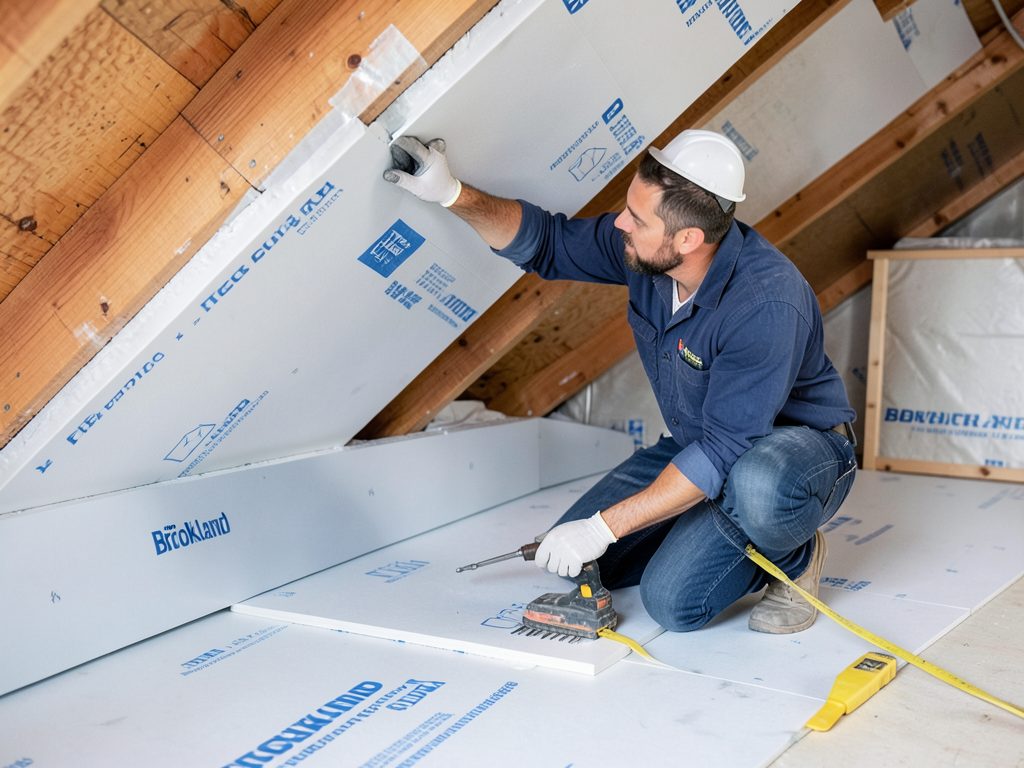
Comparing Polyiso and Rockwool Insulation for Better Energy Savings in Brookland
Homeowners in Brookland face unique energy challenges from the neighborhood’s mix of historic brick row houses and mid-century homes built before modern insulation standards. Choosing between Polyiso and Rockwool insulation directly impacts your heating bills through DC’s humid summers and freezing winters. DC Sustainable Energy Utility rebates.
Polyiso delivers higher R-value per inch than Rockwool making it ideal for tight roof cavities where space is limited. Rockwool provides superior sound dampening and fire resistance which matters in Brookland’s dense housing where walls and ceilings often share common spaces. Both materials perform differently in DC’s climate zone 4 requiring specific installation techniques to prevent moisture problems.
Understanding these differences helps Brookland homeowners make informed decisions that improve comfort while reducing energy costs. This guide compares both materials based on real performance data from local installations and explains which works best for your specific home type.
Key Differences Between Polyiso and Rockwool
Polyiso rigid foam boards contain closed-cell plastic foam that creates an air barrier preventing heat transfer through conduction. Rockwool mineral wool batts consist of spun volcanic rock fibers that trap air pockets while allowing some moisture vapor movement.
The fundamental difference affects how each material handles DC’s humidity swings. Polyiso’s closed cells resist moisture absorption but can trap condensation if improperly installed. Rockwool’s open structure absorbs minimal water while maintaining insulating properties even when damp.. Read more about Why Water is Dripping from Your Attic Ceiling Even When It’s Not Raining in Edgewood.
Installation methods also differ significantly. Polyiso requires precise cutting and sealing to prevent thermal bridging. Rockwool installs more forgivingly but needs proper vapor barriers to prevent moisture migration through brick walls common in Brookland’s historic district. Navigating Historic Preservation Roofing Rules in Dupont Circle.
R-Value Performance in Brookland’s Climate
R-value measures resistance to heat flow with higher numbers indicating better insulation. Polyiso delivers R-6 to R-6.5 per inch while Rockwool provides R-3 to R-3.3 per inch at standard thicknesses.
In Brookland’s climate zone 4, the International Energy Conservation Code requires R-49 to R-60 for attic insulation. This means Polyiso needs 8-10 inches thickness while Rockwool requires 15-20 inches to meet the same standard.
Real-world performance varies based on installation quality and building envelope integrity. A properly sealed Polyiso installation in a Brookland row house attic can reduce heating costs by 25-30% compared to uninsulated spaces. Rockwool’s sound dampening properties add value in multi-family conversions common throughout the neighborhood.
Moisture management becomes critical since Brookland experiences 40-45 inches annual precipitation with summer humidity often exceeding 85%. Polyiso’s closed-cell structure prevents moisture wicking but requires careful vapor barrier installation. Rockwool allows some vapor transmission reducing condensation risk in older homes with less perfect air sealing.. Read more about Sealing Your Leaky Roof Hatch to Save Money on Energy in Near Northeast.
Cost Comparison for Brookland Homes
Material costs differ significantly between the two options. Polyiso boards typically cost $0.40 to $0.60 per board foot while Rockwool batts range from $0.25 to $0.35 per board foot.
Installation labor varies based on material handling requirements. Polyiso’s rigid boards require more precise cutting and sealing increasing labor time by 15-20%. Rockwool’s flexible batts install faster but may require additional vapor barrier work.
For a typical Brookland row house attic requiring R-49 insulation, Polyiso installation costs approximately $1,800 to $2,400 while Rockwool runs $1,200 to $1,600 for materials and labor combined.
Long-term energy savings offset initial costs differently. Polyiso’s superior R-value achieves payback in 3-4 years through reduced heating and cooling costs. Rockwool’s sound benefits provide value beyond energy savings in Brookland’s shared-wall housing stock.
Installation Best Practices for DC Homes
Proper installation determines real-world performance regardless of material choice. Both require attention to air sealing, moisture management, and building code compliance specific to DC’s historic districts.
Air sealing forms the foundation of effective insulation. Gaps around pipes, wiring, and attic access points allow conditioned air to escape. A smoke pencil test reveals air leaks that undermine insulation performance regardless of material type.
Moisture control prevents mold growth and material degradation. In Brookland’s humid climate, vapor barriers installed on the warm side of insulation prevent condensation within wall cavities. The International Residential Code requires Class II vapor retarders in climate zone 4.
Fire safety considerations affect material selection in multi-family buildings. Rockwool’s non-combustible properties meet stricter fire codes for shared-wall construction. Polyiso requires additional fire-resistant barriers in certain applications.
Attic ventilation prevents moisture accumulation and extends roof life. Both materials work with ridge vents, soffit vents, or powered ventilation systems to maintain proper air circulation above the insulation layer.
Which Material Works Best for Your Brookland Home
Historic brick row houses built before 1950 often benefit from Rockwool’s moisture management properties. These homes typically have less perfect air sealing allowing some vapor transmission through walls. Rockwool’s ability to maintain insulating properties when slightly damp prevents the condensation problems that can occur with Polyiso in older construction.
Mid-century homes with modern construction techniques suit Polyiso well. These buildings typically have better air sealing and vapor barriers making Polyiso’s higher R-value per inch more advantageous. The material’s rigidity also helps prevent settling that can occur with batt insulation over time.. Read more about Modernizing the Roof on a Mid-Century Home in Southwest DC.
Roof type influences material selection. Flat roofs common in Brookland’s commercial areas require tapered Polyiso boards to create proper drainage slopes while maintaining insulation value. Pitched roofs in residential areas accommodate either material depending on space constraints and performance goals.
Sound considerations matter in Brookland’s dense housing. Rockwool’s superior sound dampening reduces noise transmission between units in converted row houses or basement apartments. This benefit often outweighs the slightly lower R-value for homeowners prioritizing acoustic comfort.
DCSEU Rebates and Energy Incentives
The District of Columbia Sustainable Energy Utility offers rebates for insulation upgrades meeting specific performance standards. Current programs provide $0.25 per square foot for attic insulation improvements achieving R-49 or greater.
Homeowners must work with participating contractors to qualify for rebates. These contractors understand local building codes and can document insulation levels meeting program requirements. The rebate process requires pre-approval and post-installation verification.
Federal tax credits may apply to insulation upgrades improving energy efficiency by 20% or more. The Residential Energy Efficiency Tax Credit covers 10% of material costs up to $500 for qualifying improvements.
Local utility companies offer additional incentives. Pepco provides rebates for comprehensive home energy audits that include insulation recommendations. Washington Gas supports insulation upgrades as part of weatherization programs for income-qualified households. The Real Cost of a Roof Replacement for Washington DC Homeowners.
Combining these incentives can reduce insulation upgrade costs by 30-50% making energy efficiency improvements more affordable for Brookland homeowners.. Read more about Affordable Roofing Solutions for Marshall Heights Homeowners.
Common Installation Mistakes to Avoid
Compression reduces insulation effectiveness regardless of material type. Rockwool batts installed too tightly lose up to 30% of their R-value. Polyiso boards forced into tight spaces create gaps that compromise the air barrier.
Missing vapor barriers in climate zone 4 causes condensation problems. Without proper vapor retarders, moisture from indoor air condenses within insulation layers during cold weather. This moisture reduces R-value and promotes mold growth.
Incomplete air sealing undermines insulation performance. Small gaps around electrical boxes, plumbing penetrations, and attic access points allow significant air leakage. A typical home loses 30% of its heating and cooling energy through these gaps.
Improper attic ventilation traps moisture and reduces roof life. Insulation installed directly against roof sheathing without proper ventilation channels creates condensation problems. This moisture damages roof structures and reduces insulation effectiveness.
Using incorrect material thicknesses fails to meet code requirements. Installing R-30 insulation in a climate requiring R-49 wastes money and fails to achieve desired energy savings. Always verify local code requirements before purchasing materials.
Maintenance and Long-Term Performance
Both insulation types require minimal maintenance once properly installed. However, several factors affect long-term performance in Brookland’s climate. The Best Flat Roof Maintenance Tips for Petworth Homeowners.
Moisture accumulation reduces insulation effectiveness over time. Polyiso can absorb moisture through cut edges or improper sealing, reducing R-value by 10-15% when wet. Rockwool resists moisture damage but can settle up to 20% over 15-20 years.
Pest infestations affect both materials differently. Rodents can nest in Rockwool batts, creating pathways for air movement. Polyiso’s rigid structure resists pest intrusion but can be damaged by persistent gnawing.
Roof leaks damage insulation regardless of type. Water from roof failures saturates insulation layers, requiring replacement to prevent mold growth and restore energy efficiency. Regular roof inspections prevent these costly problems.
Settling occurs more with Rockwool than Polyiso. Over time, batt insulation compresses under its own weight, especially in vertical applications. This compression reduces effective R-value by 10-15% over 10-15 years.
Building movement affects both materials. Foundation settling and structural shifts can create gaps in rigid Polyiso installations. Rockwool’s flexibility accommodates minor movement better but may allow air gaps to form.
Environmental Impact and Sustainability
Manufacturing processes differ significantly between materials. Polyiso production involves petroleum-based chemicals and blowing agents with higher embodied energy. Rockwool manufacturing uses recycled materials and volcanic rock with lower environmental impact.
Recycled content varies by manufacturer. Some Polyiso products contain up to 15% recycled content while Rockwool typically uses 40-75% recycled materials in production.
End-of-life disposal presents different challenges. Polyiso boards are difficult to recycle and often end up in landfills. Rockwool can be recycled into new insulation products at specialized facilities.
Energy savings offset manufacturing impacts over time. Both materials reduce building energy consumption significantly, with payback periods typically under 5 years for properly installed insulation.
Indoor air quality considerations affect material selection. Polyiso may off-gas volatile organic compounds while Rockwool is inert and non-toxic. This difference matters for chemically sensitive individuals.
Professional Installation vs DIY
Professional installation ensures code compliance and optimal performance. Licensed contractors understand local building requirements and can identify potential problems before they occur.
Safety considerations favor professional installation. Attics contain electrical wiring, sharp roofing nails, and unstable walking surfaces. Professionals use proper safety equipment and techniques to prevent accidents. Roofing Rockville.
Equipment requirements differ between DIY and professional installation. Professionals use specialized tools for air sealing, vapor barrier installation, and precise cutting that homeowners typically don’t own.
Warranty coverage varies by installation method. Many manufacturers require professional installation to maintain product warranties. DIY installation may void these warranties.
Time investment differs significantly. Professional crews can complete most attic insulation projects in one day while DIY installation often takes multiple weekends. This time difference affects project costs when considering your time value.
Frequently Asked Questions
Which insulation provides better energy savings in Brookland’s climate?
Polyiso typically provides better energy savings due to its higher R-value per inch, achieving R-49 with 8-10 inches versus 15-20 inches for Rockwool. However, Rockwool’s superior moisture management often makes it the better choice for Brookland’s historic homes with less perfect air sealing.
Can I install insulation over existing material?
Adding new insulation over existing material is possible but requires careful evaluation. Never install Polyiso over existing batt insulation as this can trap moisture. Rockwool can be added over existing material if the old insulation is dry and free from mold.
How long does insulation installation take in Brookland homes?
Professional installation typically requires one day for a standard attic. Factors affecting timeline include attic access difficulty, existing insulation removal needs, and any necessary air sealing work. DIY projects often take 2-3 weekends for the same work.
Will insulation help with noise reduction in my row house?
Rockwool provides superior sound dampening compared to Polyiso, reducing noise transmission by 50-70%. This makes it ideal for Brookland’s shared-wall construction where noise from neighbors can be problematic. Polyiso offers minimal sound reduction benefits.
What building codes apply to insulation in Brookland?
DC building codes require R-49 to R-60 insulation in attics for climate zone 4. Historic district homes may have additional requirements for material visibility and installation methods. Always check with the Historic Preservation Office before starting work on protected properties.
Next Steps for Your Brookland Home
Energy efficiency improvements start with understanding your home’s specific needs. Brookland’s mix of historic and modern construction requires different approaches based on building age, construction type, and performance goals.
Professional energy audits identify the most cost-effective improvements for your specific situation. These audits measure current insulation levels, air leakage, and overall energy performance to recommend targeted upgrades.
Combining insulation upgrades with air sealing and ventilation improvements maximizes energy savings. A comprehensive approach typically reduces heating and cooling costs by 25-35% compared to addressing insulation alone.
Local incentives make energy upgrades more affordable than ever. DCSEU rebates, federal tax credits, and utility incentives can reduce project costs by thousands of dollars while improving your home’s comfort and value.
Ready to improve your Brookland home’s energy efficiency? Call (771) 240-3300 today to schedule your professional energy assessment and learn which insulation solution works best for your specific needs. How to Get Your Roof Ready for a DC Winter in Chevy Chase.
Don’t wait for another high energy bill to take action. Brookland’s unique housing stock deserves specialized solutions that balance historic preservation with modern comfort. Our team understands the specific challenges of insulating DC’s diverse neighborhoods and can recommend the perfect approach for your home. For more information, visit U.S. Department of Energy insulation guide.
You may also find this helpful. Why Every Rainstorm Sounds So Loud in Your Judiciary Square Loft.
You may also find this helpful. Can the Original Rafters in Your Colonial Village Home Support New Solar Panels?.
{
“@context”: “https://schema.org”,
“@type”: “BlogPosting”,
“headline”: “Comparing Polyiso and Rockwool Insulation for Better Energy Savings in Brookland”,
“description”: “Discover which insulation type delivers superior R-value and moisture control for Brookland homes. Compare Polyiso vs Rockwool performance in DC’s humid climate and get expert installation tips.”,
“wordCount”: 2165,
“datePublished”: “2026-06-13T08:26:00.000Z”,
“dateModified”: “2026-06-13T08:26:00.000Z”,
“inLanguage”: “en-US”,
“mainEntityOfPage”: {
“@type”: “WebPage”,
“@id”: “https://aceroofingwashingtondc.com”
},
“publisher”: {
“@type”: “LocalBusiness”,
“name”: “Ace Roofing Washington DC”,
“url”: “https://aceroofingwashingtondc.com”
},
“author”: {
“@type”: “Organization”,
“name”: “Ace Roofing Washington DC”,
“url”: “https://aceroofingwashingtondc.com”
},
“image”: {
“@type”: “ImageObject”,
“url”: “https://aceroofingwashingtondc.com/wp-content/uploads/2026/03/comparing-polyiso-and-rockwool-insulation-for-bett-1.png”
}
}
{
“@context”: “https://schema.org”,
“@type”: “RoofingContractor”,
“name”: “Ace Roofing Washington DC”,
“url”: “https://aceroofingwashingtondc.com”,
“address”: {
“@type”: “PostalAddress”,
“addressLocality”: “Washington DC”
},
“areaServed”: {
“@type”: “City”,
“name”: “Washington DC”
}
}
{
“@context”: “https://schema.org”,
“@type”: “FAQPage”,
“mainEntity”: [
{
“@type”: “Question”,
“name”: “Which insulation provides better energy savings in Brookland’s climate?”,
“acceptedAnswer”: {
“@type”: “Answer”,
“text”: “Polyiso typically provides better energy savings due to its higher R-value per inch, achieving R-49 with 8-10 inches versus 15-20 inches for Rockwool. However, Rockwool’s superior moisture management often makes it the better choice for Brookland’s historic homes with less perfect air sealing.”
}
},
{
“@type”: “Question”,
“name”: “Can I install insulation over existing material?”,
“acceptedAnswer”: {
“@type”: “Answer”,
“text”: “Adding new insulation over existing material is possible but requires careful evaluation. Never install Polyiso over existing batt insulation as this can trap moisture. Rockwool can be added over existing material if the old insulation is dry and free from mold.”
}
},
{
“@type”: “Question”,
“name”: “How long does insulation installation take in Brookland homes?”,
“acceptedAnswer”: {
“@type”: “Answer”,
“text”: “Professional installation typically requires one day for a standard attic. Factors affecting timeline include attic access difficulty, existing insulation removal needs, and any necessary air sealing work. DIY projects often take 2-3 weekends for the same work.”
}
},
{
“@type”: “Question”,
“name”: “Will insulation help with noise reduction in my row house?”,
“acceptedAnswer”: {
“@type”: “Answer”,
“text”: “Rockwool provides superior sound dampening compared to Polyiso, reducing noise transmission by 50-70%. This makes it ideal for Brookland’s shared-wall construction where noise from neighbors can be problematic. Polyiso offers minimal sound reduction benefits.”
}
},
{
“@type”: “Question”,
“name”: “What building codes apply to insulation in Brookland?”,
“acceptedAnswer”: {
“@type”: “Answer”,
“text”: “DC building codes require R-49 to R-60 insulation in attics for climate zone 4. Historic district homes may have additional requirements for material visibility and installation methods. Always check with the Historic Preservation Office before starting work on protected properties.”
}
}
]
}
{
“@context”: “https://schema.org”,
“@type”: “BreadcrumbList”,
“itemListElement”: [
{
“@type”: “ListItem”,
“position”: 1,
“name”: “Home”,
“item”: “https://aceroofingwashingtondc.com”
},
{
“@type”: “ListItem”,
“position”: 2,
“name”: “Blog”,
“item”: “https://aceroofingwashingtondc.com/blog”
},
{
“@type”: “ListItem”,
“position”: 3,
“name”: “Comparing Polyiso and Rockwool Insulation for Better Energy Savings in Brookland”
}
]
}
{
“@context”: “https://schema.org”,
“@type”: “Service”,
“serviceType”: “Roofing”,
“provider”: {
“@type”: “LocalBusiness”,
“name”: “Ace Roofing Washington DC”,
“url”: “https://aceroofingwashingtondc.com”
},
“areaServed”: {
“@type”: “City”,
“name”: “Washington DC”
},
“description”: “Discover which insulation type delivers superior R-value and moisture control for Brookland homes. Compare Polyiso vs Rockwool performance in DC’s humid climate and get expert installation tips.”
}